FHFA Raises Conforming Loan Limits Again | #GoodNewsConfirmingLoans #TalkToYourAgent #SiliconValleyAgent #YajneshRai

Facebooktwitterpinterestlinkedin

FHFA Raises Conforming Loan Limits Again | Realtor Magazine

The Federal Housing Finance Agency announced it will raise its conforming loan limit on Jan. 1, 2018. Mortgage financing giants Fannie Mae and Freddie Mac will allow maximum conforming loan limits for mortgages in most parts of the U.S. to be $453,100.

For 10 years, the FHFA had set the conforming loan limit in most places at $417,000. But as home prices started rising, the FHFA bumped up the conforming loan limit in 2017 to $424,100. As prices continued to move higher this year, the FHFA has raised limits again for 2018.

The Housing and Economic Recovery Act requires the conforming loan limit of the government-sponsored entities to be adjusted each year to reflect any changes in the average U.S. home price. Average home values have risen by 6.8 percent since the third quarter of 2016, according to the FHFA’s latest House Price Index. The maximum conforming loan limit will now rise by 6.8 percent too.

Home buyers are not eligible for the baseline limit in places where the local median home value is more than 115 percent of that limit. HERA permits higher limits in some locales, but the highest is 150 percent of the baseline limit. High-cost areas may see a baseline, therefore, of up to $679,650.

The FHFA provides the following interactive chart to check conforming loan limits in your area.

Facebooktwitterpinterestlinkedin

5 Most Common Reasons for Closing Delays | #ClosingDelayReasons #TalkToYourAgent #SiliconValleyAgent #YajneshRai

Facebooktwitterpinterestlinkedin

5 Most Common Reasons for Closing Delays | Realtor Magazine

Seventy-three percent of home sales closed on time in October, but 25 percent of REALTORS® report a delay in getting to the settlement table, according to the latest REALTORS® Confidence Index, a survey based on responses from more than 3,500 real estate professionals. Only 2 percent say a contract was terminated completely.

What are the main problems encountered with delayed settlements? Real estate pros report the following:

  1. Issues related to obtaining financing: 32%
  2. Appraisal issues: 20%
  3. Home inspection/environmental issues: 16%
  4. Titling/deed issues: 11 percent
  5. Contingencies stated in the contract: 6%

Seventy-four percent of all contracts in October contained contingencies, most often for home inspections, appraisals, or financing.

Facebooktwitterpinterestlinkedin

5 Overlooked Dirt Spots Buyers Will Notice | #SmartSelling #TalkToYourAgent #SiliconValleyAgent #YajneshRai

Facebooktwitterpinterestlinkedin

5 Overlooked Dirt Spots Buyers Will Notice | Realtor Magazine

Make sure your home sellers pay attention to several areas in a home that often go uncleaned but could stand out to potential buyers. Jan M. Dougherty, author of The Lost Art of House Cleaning: A Clean House Is a Happy Home, shared with HouseLogic several spots that homeowners are likely missing, including:

1. Light fixtures

Light fixtures can be a magnet for dust and dead bugs. Spritz and wipe them with a cleaning solution to get them shining again.

2. The body of the toilet

Dougherty recommends washing the porcelain thrones all over. Start with the top of the tank and spray all around—the lid, under the lid, the seat, the surrounding floor, and the walls behind the toilet, Dougherty recommends.

3. Drawer organizers

Use a handy vac or spray a rag with vinegar and wipe away any dirt or crumbs that have accumulated in drawers throughout the home.

4. Ice maker

Clean and sanitize the entire system periodically. Old ice can absorb food odors, Dougherty says. Pull out the ice bin, dump the ice, and wash the bin and ice maker with vinegar, Dougherty recommends. Be sure to wipe the ice maker with a dry rag to get rid of any remaining moisture before putting it back in place.

5. Appliance handles

“One night a week, I take the knobs off the stove, remove the dish and the grease screen from the [over-the-range] microwave, and take the bowl with utensils that sits next to my stove and put them all in the dishwasher,” Dougherty says. “Do this before bed and by the morning you’ve cleaned half your kitchen, yet touched nothing.”

Facebooktwitterpinterestlinkedin

5 Housing Trends to Watch for 2018 | #HousingTrend #TalkToYourAgent #SiliconValleyAgent #YajneshRai

Facebooktwitterpinterestlinkedin

5 Housing Trends to Watch for 2018 | Realtor Magazine

Home shoppers may have it easier in 2018. Inventory constraints of for-sale homes and rising home prices may finally start to ease next year, according to realtor.com®’s 2018 National Housing Forecast.

“Next year will set the stage for a significant inflection point in the housing shortage,” says Javier Vivas, director of economic research for realtor.com®. “Inventory increases will be felt in higher priced segments after spring home buying season, which we expect to take hold and begin to provide relief for buyers and drive sales growth in 2019 and beyond.”

But the big wild card for 2018 will be any impact from the proposed tax reform legislation, which is currently being debated by Congress, realtor.com® adds.


Here’s a closer look at realtor.com®’s five housing prediction trends for 2018:

1. Inventory to start increasing: Realtor.com® projects positive year-over-year inventory growth by the fall of 2018—which will be the first time since 2015. “Inventory declines are expected to decelerate slowly throughout the year, reaching a 4 percent year-over-year decline in March before increasing in early fall, after the peak home-buying months,” realtor.com® notes in its report. The cities expected to see inventory levels recover first are Boston; Detroit; Kansas City, Mo.; Nashville; and Philadelphia. The majority of this growth will be in the mid- to upper-tier price points (which includes homes priced above $350,000). On the other hand, recovery in the starter home market likely will linger since levels are “significantly depleted by first time buyers,” realtor.com® notes.

2. Price appreciation to slow: Home buyers likely will see home prices moderate in the new year. Realtor.com® forecasts home prices to slow to a 3.2 percent growth year over year nationwide. For comparison, home prices in 2017 posted a 5.5 percent increase. The majority of the slowing price appreciation will be centered in the higher-priced ranges as more inventory becomes available. Entry-level homes, on the other hand, likely will continue to see price gains due to a larger potential buyer pool as well as a more limited number of homes available for sale in this price range.

3. Millennials to gain market share: Finally, the long-held predictions may hold true. Millennials may reach 43 percent of home buyers taking out a mortgage by the end of 2018, up from an estimated 40 percent in 2017, realtor.com® projects. The largest cohort of millennials are expected to turn 30 in 2020. “Millennials are a driving force in today’s housing market,” Vivas says. “They already dominate lower price home mortgage and are getting close to overtaking older generations for mid- and upper-tier mortgages. While financially secure in general, their debt to income ratios have started to increase as they compete for higher priced homes.”

4. The South to lead in sales growth: Realtor.com® forecasts that Southern cities will top national averages in home sales growth in 2018. Markets like Tulsa, Okla.; Little Rock, Ark.; Dallas; and Charlotte, N.C., are expected to be the highest performers.  Sales in these markets are predicted to increase by 6 percent or more. Nationally, sales growths are predicted to grow by 2.5 percent. “The majority of this growth can be attributed to healthy building levels combating the housing shortage,” realtor.com® notes in its report. “With inventory growth just around the corner, these areas are primed for sales gains in years to come.”

5. Tax reform wild card: Tax reform could dampen 2018 sales and price forecasts, realtor.com® reports. The U.S. House has passed a tax bill, and the Senate likely will vote on one soon. “While the ultimate impact of tax reform will depend on the details of the plan that is finally adopted, both versions include provisions that are likely to decrease incentives for mobility and reduce ownership tax benefits,” realtor.com® reports. “On the flip side, some taxpayers, including renters, are likely to see tax cuts. While more disposable income for buyers is positive for housing, the loss of tax benefits for owners could lead to fewer sales and impact prices negatively over time with the largest impact on markets with higher prices and incomes.” Read more: Tax Reform Proposals Threaten Homeowners and REALTORS® Square Up After House Passes Tax Bill

Facebooktwitterpinterestlinkedin

The Front Porch Is in Demand | Come Back | #FrontPorchComeBack #TalkToYourAgent #SiliconValleyAgent #YajneshRai

Facebooktwitterpinterestlinkedin

The Front Porch Is in Demand | Realtor Magazine

The front porch—a classic feature of American homes—is making a comeback but with a twist.

Younger crowds are literally turning porches into stages. “Porchfest” is growing in popularity across the country, in which neighborhood music festivals pop up that are enjoyed from homeowners’ front porches.

The Atlantic Monthly’s CityLab reports: “In the Instagram age, the front steps have become places to see and be seen, throw a rocking concert or party, and to foster metropolitan community in a walk-by, stop-in-for-wine sense.”

Read more: Welcome Back the Front Porch

Shelley Glica in Niagara Falls, Ontario, told CityLab how she organized a Porchfest in her community and how in warmer months she’ll also host a “Stories From the Porch” series of speakers on art, history, and culture. Glica and others represent a generational rethinking of the front porch, CityLab reports.

Porches are growing in demand across the country. Twenty-three percent more new homes are being constructed with a front porch than two decades ago. The number of new homes built with porches was at 65 percent last year, according to the National Association of Home Builders. In the Southeast, that figure jumps to 86 percent. An NAHB survey from 2016 also shows that millennials—more than any other age group—say they want a porch.

The front porch was once a celebrated signature of Federal architecture. In the 1800s, past presidents had launched successful front-porch political campaigns. For homeowners, front porches were a place to do chores, such as shuck beans, or to get fresh air on hot days before air conditioners. But once air conditioning was invented, Americans showed less need for cooling porches in the middle of the 20th century. The invention of televisions also pushed homeowners inside more.

Nowadays, younger generations are finding the porch can be an enjoyable hangout spot. Scott Doyon, who organized a Porchfest in the Atlanta area, says the front porch is now being used as a place to host friends over for hors d’oeuvres or even sharing a concert on Instagram or other social media.

“I try to find ways to plug those old ways of living into the modern world,” Doyon says. “I still believe in the value of porches as a conduit to community-building—it just unfolds in a different way now.”

Facebooktwitterpinterestlinkedin

Mortgage Rates Sink Lower This Week | #EaseOnInterestRates #TalkToYourAgent #SiliconValleyAgent #YajneshRai

Facebooktwitterpinterestlinkedin

Mortgage Rates Sink Lower This Week | Realtor Magazine


The 30-year fixed-rate mortgage is averaging lower than it did a year ago, and remains well below the 4 percent threshold this week.

“The 30-year fixed mortgage rate fell two basis points to 3.9 percent in this week’s survey, but we closed our survey prior to a surge in long-term interest rates following an upward revision to third quarter U.S. Real GDP growth and comments by Federal Reserve Chair Yellen touting a broad-based economic expansion,” says Len Kiefer, Freddie Mac’s deputy chief economist. “The market implied probability of a Fed rate hike in December neared 100 percent, helping to drive short term interest rates higher. The 5/1 Hybrid ARM, which is more sensitive to short-term rates than the 30-year fixed mortgage, increased 10 basis points to 3.32 percent in this week’s survey. The spread between the 30-year fixed mortgage and 5/1 Hybrid ARM is just 58 basis points this week, the lowest spread since November of 2012.”

Freddie Mac reports the following national averages with mortgage rates for the week ending Nov. 30:

  • 30-year fixed-rate mortgages: averaged 3.90 percent, with an average 0.5 point, decreasing from last week’s 3.92 percent average. Last year at this time, the 30-year fixed-rate mortgage averaged 4.08 percent.
  • 15-year fixed-rate mortgages: averaged 3.30 percent, with an average 0.5, down from last week’s 3.32 percent. A year ago, 15-year rates averaged 3.34 percent.
  • 5-year hybrid adjustable-rate mortgages: averaged 3.32 percent, with an average 0.3 point, an increase from last week’s 3.22 percent average. A year ago, 5-year ARMs averaged 3.15 percent.
Facebooktwitterpinterestlinkedin

This Is How Fast a Home Sells Today | #HomesSellFast #TalkToYourAgent #SiliconValleyAgent #YajneshRai

Facebooktwitterpinterestlinkedin

This Is How Fast a Home Sells Today | Realtor Magazine

Homes today spend a median time of three weeks on the market—far shorter than the median of 11 weeks five years ago, according to new data from the National Association of REALTORS®. “The inventory shortage and the growing economy and job creation has increased the interest in home buying,” says NAR Chief Economist Lawrence Yun. “There is just not enough inventory; people need to fight over the few homes available on the market.”

Historically, about 1.2 million new homes are built every year, but this year, only about 800,000 have been constructed. “It’s been below that in prior years, and in the past decade, greatly lower than that,” Yun says. “Today’s shortage is largely explained by a decade of underproduction.”

Some markets are so hot that even three weeks is too long for a home to sit. “If we make it three weeks in our market, there is something wrong,” Boston-area real estate agent Darlene Umina told CNNMoney. “These days, you know within the first weekend whether the price was right.” Umina says she hosted an open house earlier this year that resulted in 18 offers on the home. Three of those offers were cash.

In San Francisco, real estate pro Erin Thomas says she’s had buyers arrive at open houses and submit an offer on the spot. She also says offers above the list price and without contingencies are becoming more commonplace.

Facebooktwitterpinterestlinkedin

New Homes Are Getting Smaller | #NewHomesGettingSmaller #TalkToYourAgent #SiliconValleyAgent #YajneshRai

Facebooktwitterpinterestlinkedin

New Homes Are Getting Smaller | Realtor Magazine

Developers are continuing to shrink the size of new single-family homes, according third-quarter housing data compiled by the National Association of Home Builders. The median square footage of a single-family home was 2,378 square feet in the third quarter.

In the years following the Great Recession, builders were focused on the higher end of the market, catering to larger-sized homes. But more recently, builders have renewed their focus on the entry-level market, and NAHB predicts square footage of new homes to continue to decrease.

“Typical new-home size falls prior to and during a recession, as home buyers tighten budgets, and then sizes rise as high-end home buyers, who face fewer credit constraints, return to the housing market in relatively greater proportions,” NAHB explains at its Eye on Housing blog. “This pattern was exacerbated during the current business cycle due to the market weakness among first-time home buyers. But the recent declines in size indicate that this part of the cycle has ended, and the size will trend lower as builders add more entry-level homes into inventory.” 

Facebooktwitterpinterestlinkedin

4 Renovations That Grab Buyers’ Attention | #RenovationsToSell #TalkToYourAgent #SiliconValleyAgent #YajneshRai

Facebooktwitterpinterestlinkedin

4 Renovations That Grab Buyers’ Attention | Realtor Magazine

Among the home improvement projects buyers are most likely to value are those that increase storage space and preserve vintage features. Southern Living magazine recently rounded up some of the renovations that get sellers the most attention for their properties, including:

Temperature-controlled square footage: “From the appraiser’s point of view—and really from everyone’s—heated and cooled square footage is the biggest winner” in terms of payoff, says Dewey Golub, a real estate pro with Keller Williams Realty in Charleston, S.C. That’s important to keep in mind for buyers who are weighing a garage, attic, or screened-in porch conversion.

Cosmetic kitchen tweaks: Southern Living says more buyers are turning away from busy backsplashes and jarring palettes in the kitchen, opting for a simpler subway tile backsplash and subdued paint colors for cabinetry. Los Angeles agent Ben Lee also suggests using stainless steel appliances to help modernize a dated kitchen. “They don’t have to be that expensive,” he says.

Vintage preservation: If the property has historical value, stay true to its character with projects such as restoring original window casements and hardware. “You want to respect the authenticity and the integrity of the home,” says Steven Jones of Better Shelter, a Los Angeles-based residential real estate development and design firm.

Plenty of shortage: Organizational accents, such as built-in bookshelves and window seats with storage underneath, are not only practical but also offer “old-school charm,” Southern Living notes. When closet space is tight, consider adding storage solutions such as extra shelves, hooks, and rods. “If there is limited closet space, I always install an extra closet rod so people can increase their hanging capacity,” Jones says.

Facebooktwitterpinterestlinkedin

The Shower In The Master Bathroom Is Getting a Lot More Attention | #MasterBathShower #TalkToYourAgent #SiliconValleyAgent #YajneshRai

Facebooktwitterpinterestlinkedin

Hot Home Trend: The Statement Shower

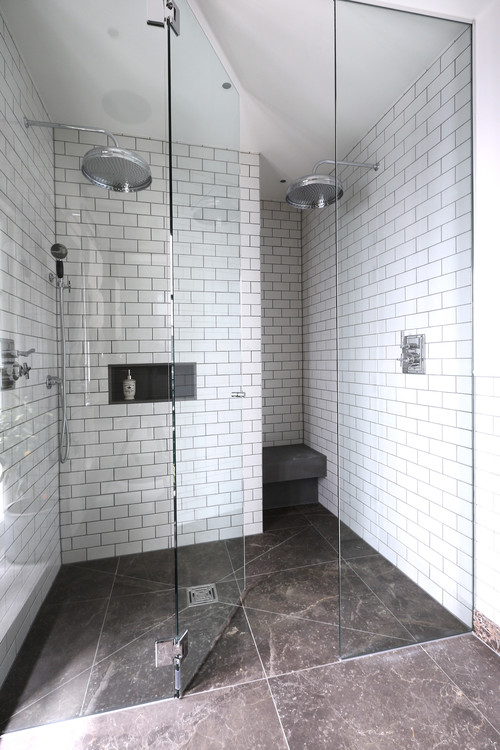
The shower in the master bathroom is getting a lot more attention. In fact, it’s one of the main splurges among renovating homeowners, according to the 2017 U.S. Houzz Bathroom Trends Study. These “statement showers,” as Houzz dubs them in its report, include high-tech features, like rainfall showerheads, dual showers, curbless showers, and body sprays.


Upgrading the master shower was the most popular renovation project, according to the survey of more than 1,200 U.S. homeowners who were in the midst or just completed a bathroom reno project. For more than half of renovators, their main aim was to increase their shower’s size. Also, survey respondents showed a rise in demand for high-tech features, such as mood lighting or digital controls, in master bathrooms.

Over a quarter of homeowners – 27 percent – have opted to remove the bathtub in their master bathroom renovations, according to the survey. The removal of the bathtub has allowed more room for a larger shower.

“This year’s Bathroom Trends Study sheds light on two key trends in master bathrooms, showers as a focal point and the growing role of high-tech features in bathroom products,” says Nino Sitchinava, principal economist at Houzz. “Additionally, it is clear that today’s master bathroom renovations are marked by timeless and durable elements, from natural stone finishes to curbless shower entries, a benefit of having older generations in the driver’s seat. Still, the early wave of millennial homeowners reveals their preferences for homes of the future, from larger master bathrooms to clean lines and white and gray color pallets.”

The Houzz study found that the national average for a major remodel of a large master bathroom (considered over 100 square feet) is $21,000.

Facebooktwitterpinterestlinkedin