6 Types of Mortgage Fraud Are Becoming More Prevalent | #MortgageFrauds #TalkToYourAgent #SiliconValleyAgent #YajneshRai #YourAgentMatters #01924991

Facebooktwitterpinterestlinkedin

6 Types of Mortgage Fraud Are Becoming More Prevalent | Realtor Magazine

Mortgage fraud climbed 12.4 percent year over year in the second quarter of 2018, and about one out of every 109 mortgage applications has been found to contain false or misleading information, according to real estate data firm CoreLogic. “Because home prices are rising and demand is strong, most mortgage fraud in this type of market is motivated by bona fide borrowers trying to qualify for a mortgage,” says Bridget Berg, CoreLogic’s principal of fraud solutions strategy. “Undisclosed real estate liabilities, credit repair, questionable down payment sources, and income falsification are the most likely misrepresentations.”


Hand shadow casted over keywboard

© Ian Hooton – Science Photo Library/Getty Images


Fraud is most common in conforming mortgages with loan-to-value ratios of 80 percent or less, according to CoreLogic. The metro areas with the highest increases of fraud risk year over year are Oklahoma City; El Paso, Texas; Springfield, Mass.; Albuquerque, N.M.; and Spokane, Wash. Overall, the states with the highest incidences of mortgage fraud are New York, New Jersey, and Florida, according to the report.

CoreLogic identifies the following as the most common types of mortgage fraud:

  • Income fraud: An applicant misrepresents the existence, continuance, source, or amount of their income.
  • Occupancy fraud: An applicant deliberately misstates the intended use of a property as a primary or secondary residence or an investment.
  • Transaction fraud: The applicant misrepresents the nature of the transaction, such as an undisclosed agreement between parties, falsified down payments, non-arm’s-length sale, or use of a straw buyer.
  • Property fraud: An applicant intentionally misrepresents information about the property or its value.
  • Undisclosed real estate debt: An applicant fails to disclose additional real estate debt or previous foreclosures.
  • Identity fraud: An applicant alters their identity or credit history, or uses a false identity.

The largest uptick—22 percent—was in income fraud over the past 12 months, according to CoreLogic. Massachusetts, Colorado, Utah, Nevada, and Kansas have seen the most significant increases in income fraud over the past year, according to the report.

Facebooktwitterpinterestlinkedin

How to Choose the Right School: 6 Tips for Parents | #SchoolResearch #TalkToYourAgent #SiliconValleyAgent #YajneshRai #YourAgentMatters #01924991

Facebooktwitterpinterestlinkedin

How to Choose the Right School: 6 Tips for Parents

If you’re a parent, buying or renting a new home isn’t just about where you’ll tuck the kids into bed at night — it’s also about where you’ll send them off to school in the morning.

So, how can you be sure your dream house feeds into your child’s dream school? You’re going to have to do some homework.

1. Go beyond the numbers

Every state’s education department publishes an online “report card” for each district and school. But just as you wouldn’t buy a house based solely on square footage or listing photos, you shouldn’t select a school just for its test scores and teacher-to-student ratios.

Dr. Steve McCammon, chief operating officer at Schlechty Center, a nonprofit that helps school districts improve student engagement and learning, cautions that most reported test scores are for English and math. They don’t provide insight into arts or music programs or how well a school teaches critical thinking skills.

The right school isn’t something you can determine based on any statistics, numbers or even reputation, says Andrew Rotherham, co-founder of Bellwether Education Partners and writer for the Eduwonk blog.

“Don’t go where the highest test scores are or where everybody else says you should go,” he says. “Different kids want different things. Go to the school that fits your kid.”

Adds Rotherham: “The most important things are what does your kid need and what does the school do to meet those needs. Whether you’re talking public, private or charter, you can find excellence and mediocrity in all of those sectors.”

2. Take a school tour

Just as you’d look around potential homes before signing a contract, you’ll want to do the same with potential schools. Call and arrange to tour the school and observe.

“Be suspicious of any school that isn’t into letting you visit,” says Rotherham. Some schools may say visitors are too disruptive, but he calls that a cop-out. “With some fairly basic norms, you can have parents and other visitors around without disrupting learning.”

Sit in on a class or two and take notes. You want to see students who are genuinely engaged, not wasting time or bored. It’s OK for a classroom to have lots of talk and movement if it’s all directed toward a learning goal.

Schools should be relatively noisy places. McCammon says, “If you go into a middle school, and you hear no noises, I would be concerned that the principal is more interested in keeping order than in making sure kids are learning.”

Observe how teachers and administrators interact with the students and vice versa. Do they display mutual respect? “You don’t need to be an education expert,” says Rotherham.

See if student work is on display. “A good school is a school where, regardless of grade level, student work is everywhere,” McCammon says. “It means that place is about kids and their work.”

Talk to kids, too — they’re the subject matter experts on their school. And if you have friends with kids in schools you’re considering, ask them what they like and don’t like about their schools. Kids won’t try to feed you a line. “They’re pretty unfiltered,” Rotherham says.

Check out the physical space, suggests National PTA President Jim Accomando. However, don’t get caught up on the building’s age and overlook the quality of the programs going on inside.

Look for signs that the school community takes pride in the facility. It might not be pristine, but trash on the floors or signs of rampant vandalism are red flags. If you see something that seems off or odd, ask if there’s a plan to address it.

3. Check out the community

Go to a school board meeting for clues about the district. Are parents there because their children are being honored or their work is being showcased? Or are they there because of a problem? Likewise, attend a PTA or PTO meeting, and chat with the parents there. They are likely the most involved “outsiders” and can share school challenges and successes.

Another consideration: the makeup of the students. Chances are, if you opt for a neighborhood school, you’ll find a certain similarity between your kids and their classmates, because there are probably a lot of similarities between you and your neighbors. But a school that has a diverse student body offers a big benefit.

“We live in a diverse society,” Rotherham says. “If you want to prepare your kids for what their lives are going to be like in this country going forward, it’s important for them to have experience with diverse groups.”

Even if your child’s school isn’t particularly diverse, avenues like sports and music give them a chance to interact with students from different backgrounds.

4. Think long term

Today’s first-grader will be heading to middle school before you know it. Unless you plan on moving relatively soon, be aware of the middle and high schools in your district.

“If you pick a house because you love the elementary school, you’d better be psyched by the middle school and high school,” Rotherham says. “Or have some kind of a plan” for post-elementary years.

Of course, there is such a thing as planning too far ahead. The music prodigy wowing your friends at her third-grade recorder performance may decide she hates band and wants to focus on soccer by the time she hits middle school. Rest assured: If upper-level schools in your prospective district are about kids doing great work, they’ll likely be a good fit.

5. Watch for boundary issues

Pay attention to the boundaries of prospective school districts. The houses across the cul-de-sac could be in a different school service area or even a different school district. And boundaries often change. To be sure, call the school district and give them the specific address you’re interested in.

Don’t assume you can fudge an address or get a waiver to enroll your children in a school or a district that doesn’t match your address. Things that were allowed last year may not be this year. If an individual school or district is at capacity, they will get very picky about enrollment outside of the school assigned to your home, which can lead to heartbreak if you find yourself on the wrong side of that boundary line.

6. Look for a place where you feel welcome

Whatever involvement you put into your child’s school will pay off, says Accomando. “If you can be engaged at school, you will understand the pulse of what’s happening there.”

He also says that doesn’t mean getting sucked into a huge commitment. “You can read in your child’s first-grade class. You can hand out water at a fun run or contribute something for a teacher appreciation party at the high school. And when you do, walk the halls and see what’s happening.”

McCammon says good schools should welcome parents as volunteers and visitors. “Look for evidence of parents feeling comfortable and engaging with the school,” he says. The principal should be someone you feel comfortable talking with if there’s a problem.

No matter how welcoming the school, it’s natural to have some butterflies on the first day in a new school. Just as it takes time for a new house to feel like home, it takes time for kids to settle into a new school.

Once they’ve found their way to the restroom without asking directions, made some friends and gotten to know their teacher, they’ll be comfortable with their new learning home. And your research will have been well worth the effort.

Facebooktwitterpinterestlinkedin

Home Prices Are So High, Pending Sales Have Dropped For 7 Months In A Row | #MarketSlowDown #TalkToYourAgent #SiliconValleyAgent #YajneshRai #YourAgentMatters #01924991

Facebooktwitterpinterestlinkedin

Home Prices Are So High, Pending Sales Have Dropped For 7 Months In A Row

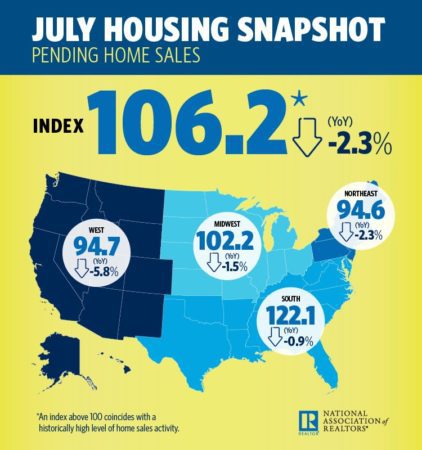
Pending home sales dropped 0.7 percent month-over-month and 2.3 percent year-over-year to 106.2 — the seventh consecutive month of annualized declines, according to the latest National Association of Realtors (NAR) Pending Home Sales Index (PHSI), released on Wednesday. PHSI tracks home sales in which a contract is signed but the sale has not yet closed.

“Contract signings inched backward once again last month, as declines in the South and West weighed down on overall activity,” said NAR Chief Economist Lawrence Yun in a press release.

“It’s evident in recent months that many of the most overheated real estate markets — especially those out West — are starting to see a slight decline in home sales and slower price growth.”

“The reason sales are falling off last year’s pace is that multiple years of inadequate supply in markets with strong job growth have finally driven up home prices to a point where an increasing number of prospective buyers are unable to afford it,” he added.

Looking forward, Yun expects existing-home sales to decrease 1.0 percent to 5.46 million, and the national median existing-home price to increase around 5.0 percent. In 2019, Yun predicts that existing sales and home prices will rise by 2 percent and 3.5 percent, respectively.

“Rising inventory levels — especially if new home construction finally starts picking up — should help slow price appreciation to around two-and-four percent, which will help aspiring first-time buyers, and be good for the long-term health of the nation’s housing market,” said Yun.

The PHSI in the Northeast and Midwest experienced month-over-month gains of 1.0 and 0.3 percent, but failed to make any positive headway on an annualized basis. The South and West experienced month-over-month losses of 1.7 percent and 0.9 percent, respectively, and year-over-year declines of 0.9 percent and 5.8 percent.

Facebooktwitterpinterestlinkedin

Mortgage Rates Jump to 6-Week High | #RatesGoingUpAgain #TalkToYourAgent #SiliconValleyAgent #YajneshRai #YourAgentMatters #01924991

Facebooktwitterpinterestlinkedin

Mortgage Rates Jump to 6-Week High | Realtor Magazine


Mortgage rates for 30, 15, ARM. Full information at http://www.freddiemac.com/pmms/

© REALTOR® Magazine


A strong job market and consumer credit are driving up mortgage rates for the third consecutive week and now to their highest level in six weeks. Mortgage rates are 0.82 percent higher than a year ago—the largest year-over-year increase since May 2014, Freddie Mac reports.

Despite the higher rates, Sam Khater, Freddie Mac’s chief economist, expects buyer demand to remain high. “This spectacular stretch of solid job gains and low unemployment should help keep home buyer interest elevated,” Khater says. “However, mortgage rates will likely also move up, as the Federal Reserve considers short-term rate hikes this month and at future meetings.”

Freddie Mac reports the following national averages with mortgages rates for the week ending Sept. 13:

  • 30-year fixed-rate mortgages: averaged 4.60 percent, with an average 0.5 point, up from last week’s 4.54 percent average. Last year at this time, 30-year rates averaged 3.78 percent.
  • 15-year fixed-rate mortgages: averaged 4.06 percent, with an average 0.5 point, climbing from last week’s 3.99 percent average. A year ago, 15-year rates averaged 3.08 percent.
  • 5-year hybrid adjustable-rate mortgages: averaged 3.93 percent, with an average 0.3 point, unchanged from last week. A year ago, 5-year ARMs averaged 3.13 percent.
Facebooktwitterpinterestlinkedin

7 Qualities of a Good Neighbor | #GoodNeighbors #TalkToYourAgent #SiliconValleyAgent #YajneshRai #YourAgentMatters #01924991

Facebooktwitterpinterestlinkedin

7 Qualities of a Good Neighbor

If you want good neighbors, you’ll first have to become one yourself. Master these seven techniques, and even you (yes, you!) can win the approval of your entire neighborhood.

1. Good neighbors bring cookies

Whether you’re new in town or haven’t kept in touch, a delivery of freshly baked goods is a perfect way to break the ice and let neighbors know that you’re thinking of them.

If cookies can keep Santa returning year after year with a bag full of loot, then surely they can train your neighbors to do your bidding. Consider the following scenario.

“Honey, somebody’s robbing the neighbor’s house again.”
“Wait, Janet. The ones who brought cookies yesterday?”
“Exactly. This time I’ll call the cops.”

2. Good neighbors rarely gossip

If your neighbor seems to know the dirt on everyone within a two-block radius, you can count on them to keep tabs on your personal life as well.

The next time Nosy Nellie gleefully describes the contents of the Rickenbacker’s trash again, move the conversation along by refocusing the conversation on her. “So, what are you growing in your garden this year?”

You aren’t in high school anymore, so preserve relationships with your neighbors and avoid the gratuitous gab fests.

3. Good neighbors share phone numbers

For such a connected age, you should really question why you don’t have your neighbors’ phone numbers. After all, what if they receive your package by mistake? What if the house floods while you’re on vacation? Worse yet, what if you need a babysitter?

If you feel uncomfortable bringing it up, ask during one of your cookie deliveries (you are following rule number one, right?) or right before a trip. Jot down your name, number and email address on a piece of paper and ask if your neighbor is comfortable sharing theirs.

4. Good neighbors help before they’re asked

The neighbor who says, “Let me know if you need anything,” probably isn’t going to help whenever you actually need something. You, on the other hand, are a good neighbor and genuinely want to help out.

To get ahead of the meaningless small talk, anticipate their needs. If they have kids and you’re comfortable babysitting, tell them up front. If they’re clearly struggling to mow the lawn during a heat wave, ask for the best time to stop by with your lawnmower.

5. Good neighbors are tidy

Even if you lack self-respect, respect the sensitive tastes of others and clean up your act.

Keep the ironic lawn ornaments to a minimum. Keep trash receptacles hidden in the side yard, or better yet, the garage.

Whenever you’ve finished gardening or landscaping for the day, put away your tools and bags of unused mulch. Rake the leaves and clean up grass clippings and all the other stuff your dad used to bug you about.

And if it’s not too much trouble, pressure wash and paint your house periodically.

6. Good neighbors mow the lawn

An unkempt and weedy lawn is embarrassing for your neighbors, so it should be embarrassing for you as well. Keeping it mowed every week or two is a good start, but it will take more than that to win the approval of the locals.

Trim the edge of your lawn regularly, fertilize on schedule and keep weeds to a minimum. Keep your foundation plantings simple, neatly trimmed and topped off with mulch.

If your neighborhood allows it, go the no-lawn method by planting swaths of low-maintenance, drought-tolerant ground covers. Crucially, don’t overdo it on the sprinklers — especially when it’s raining.

7. Good neighbors communicate

That old “good fences make good neighbors” quote had to come up at some point, right? A good neighbor must respect boundaries. That said, they should also be crossed when the fences themselves start losing pickets and falling over in a storm.

Even if it’s technically their fence, you might not be happy with the shoddy workmanship and resentment that you’ll have to live with when they get around to fixing it themselves.

Address shared interests like fences, drainage ditches and troublesome trees ahead of time so that you can work out a plan that both parties can agree to.

Oh, and don’t forget to bring cookies.

Facebooktwitterpinterestlinkedin

‘Nonbanks’ Emerge as Top Lenders for Home Buyers | #NotBankLenderOptions #TalkToYourAgent #SiliconValleyAgent #YajneshRai #YourAgentMatters #01924991

Facebooktwitterpinterestlinkedin

‘Nonbanks’ Emerge as Top Lenders for Home Buyers | Realtor Magazine

More buyers are bypassing big, established banks and turning to a growing subset of specialized lenders to obtain a mortgage.


Bank vault

© Donald Iain Smith – Blend Images/Getty Images


Last year, a “nonbank” called Freedom Mortgage originated $51.1 billion in home loans, more than Citigroup Inc. and Bank of America Corp., according to research from business news publication Inside Mortgage Finance. Freedom has risen from being the 78th largest mortgage lender in the U.S. in 2012 to the 11th largest today.

Nonbanks have re-emerged since the last housing crisis and are taking more business from traditional banks, now accounting for 52 percent of U.S. mortgage originations—up from 9 percent in 2009—according to Inside Mortgage Finance. Six of the 10 largest U.S. mortgage lenders today are nonbanks.

Larger banks have been pulling away from the general mortgage market and have placed a greater focus on consumers with more financial stability since the Great Recession. Nonbanks tend to focus on serving first-time buyers and moderate-income families. Nonbanks also tend to take short-term loans from other banks to fund their lending, and some industry analysts are concerned that these entities could overextend themselves—as many did a few years ago. “As long as the good times roll on, it’s fine,” Ed Pinto, co-director of the Center on Housing Markets and Finance at the American Enterprise Institute, told The Wall Street Journal. “But all I can say is, we’re in a boom, and you cannot keep going up like this forever.”

Quicken Loans has emerged as the largest nonbank. The top mortgage lenders, by originations, for the first half of 2018 are:

  • Wells Fargo
  • JPMorgan Chase
  • Quicken Loans
  • PennyMac
  • Bank of America
  • U.S. Bank
  • Caliber
  • United Wholesale
  • Amerihome
  • loanDepot
  • Freedom Mortgage
Facebooktwitterpinterestlinkedin

Bill Would Ease Mortgage Restrictions on Self-Employed | #MortgageForSelfEmployed #TalkToYourAgent #SiliconValleyAgent #YajneshRai #YourAgentMatters #01924991

Facebooktwitterpinterestlinkedin

Bill Would Ease Mortgage Restrictions on Self-Employed | Realtor Magazine

A bipartisan bill on Capitol Hill aims to make it easier for self-employed individuals and small-business owners to obtain a mortgage. Federal lending rules in recent years have made it difficult for the self-employed to qualify for a mortgage, favoring more documentable incomes that can be verified by pay stubs, W-2s, and two years of steady income. That has made it more troublesome for those who work for themselves, earn money at multiple jobs, or have large seasonal swings in their incomes. Currently, self-employed people who qualify for a mortgage may have to accept a higher interest rate or make a larger down payment.


Young Barista Smiling Leaning On Coffee Shop Counter

© Tom Werner – DigitalVision/Getty Images


But the Self-Employed Mortgage Access Act, which has been introduced in the U.S. Senate, attempts to expand lenders’ permissible sources to verify incomes beyond current federal qualified-mortgage regulations. Sen. Mark R. Warner, D-Va., who is co-sponsoring the bill with Sen. Mike Rounds, R-S.D., says up to 42 million Americans—or about 30 percent of the workforce—are self-employed or fall within the gig economy. “Too many of these otherwise creditworthy individuals are being shut out of the mortgage market because they don’t have the same documentation of their income—pay stubs or W-2s—as someone who works 9 to 5,” says Warner.

Meanwhile, mortgage financing giants Fannie Mae and Freddie Mac have been exploring ways to underwrite self-employed and gig-economy applicants, such as with automated solutions that could document the incomes typical for such workers.

Facebooktwitterpinterestlinkedin

Mortgage Rates Inch Up | #RatesGoingUpAgain #TalkToYourAgent #SiliconValleyAgent #YajneshRai #YourAgentMatters #01924991

Facebooktwitterpinterestlinkedin

Mortgage Rates Inch Up | Realtor Magazine


Rates

Freddie Mac


Mortgage rates rose slightly for the second consecutive week, and economists warn that more rises are likely to come.

“Borrowing costs may be slowly on the rise again in coming weeks, as investors remain optimistic about the underlying strength of the economy,” says Sam Khater, Freddie Mac’s chief economist.

Mortgage rates are now up three-quarters of a percentage point from last year. Home prices have been rising too—although at a slower pace recently—but are still “outrunning rising inflation and incomes,” Khater notes. “The weakening in affordability is hindering many interested buyers this fall, even as the robust economy brings them into the market.”

Freddie Mac reports the following averages with mortgage rates for the week ending Sept. 6:

  • 30-year fixed-rate mortgages: averaged 4.54 percent, with an average 0.5 point for the week, increasing from last week’s 4.52 percent average. Last year at this time, 30-year rates averaged 3.78 percent.
  • 15-year fixed-rate mortgages: averaged 3.99 percent, with an average 0.4 point, increasing from last week’s 3.97 percent average. A year ago, 15-year rates averaged 3.08 percent.
  • 5-year hybrid adjustable-rate mortgages: averaged 3.93 percent, with an average 0.3 point, increasing from last week’s 3.85 percent average. A year ago, 5-year ARMs averaged 3.15 percent.
Facebooktwitterpinterestlinkedin

Lots Are Costing Buyers More | #LotsNotReallyDeals #TalkToYourAgent #SiliconValleyAgent #YajneshRai #YourAgentMatters #01924991

Facebooktwitterpinterestlinkedin

Lots Are Costing Buyers More | Realtor Magazine


Lots may be getting smaller, but they’re also getting more expensive, according to analyzed data taken from the U.S. Census Bureau’s Survey of Construction. Single-family lot prices reached a new record high in 2017—half of the lots were priced at or above $47,400.


Lots costing more

© Michael H – DigitalVision/Getty Images


While this is a new nominal record, when adjusted for inflation, lot values have still not reached their peaks from the housing boom days, the National Association of Home Builders reports. During the housing boom, half of lots were priced at more than $43,000—this is more than $50,000 when converted to 2017 values.

However, some regions within the U.S. have seen their lot prices surpass their former peaks, even when adjusted for inflation. Rising lot values are the most pronounced in the West South Central and West North Central divisions, where lot values have climbed to new historical records.

The West South Central division—which includes Texas, Oklahoma, Arkansas, and Louisiana—tended to have values below the national median historically but started to catch up in 2015 to national numbers. Half of the lots in the region are selling for more than $56,000, which is a significant increase from the housing boom years when half of lots were priced under $30,000.

The West North Central division—which includes Iowa, Minnesota, and North and South Dakota—also saw lot prices reach a record high. Half of the lots in the region were priced above $64,000 in 2017, which also exceeded values from the housing boom days.


NAHB lot chart


“Given that the nation’s lots are getting smaller and home production is still significantly below the historically normal levels, it might seem surprising that lot values keep going up,” the NAHB notes on its blog, Eye On Housing. “However, the rising values are consistent with persistent record lot shortages. They are also consistent with significant and rising regulatory costs that ultimately increase development costs and boost lot values.”

Facebooktwitterpinterestlinkedin

Study Reveals ‘Starbucks Effect’ on Home Prices | #StarbucksEffect #TalkToYourAgent #SiliconValleyAgent #YajneshRai #YourAgentMatters #01924991

Facebooktwitterpinterestlinkedin

Study Reveals ‘Starbucks Effect’ on Home Prices | Realtor Magazine

Having a Starbucks open near a neighborhood could increase nearby home values, potentially by a few thousand dollars, a new study from Harvard Business School finds. The study’s authors focused on gentrification of neighborhoods using Yelp data, but discovered the “Starbucks effect” during their research.


A cappucino with the foam showing a smiling creature

lauramusikanski – Morguefile


Using Yelp data to find the entry of each Starbucks in a ZIP code, researchers found a 0.5 percent increase in housing prices within a year after a Starbucks opens. 

Harvard economics professor Edward Glaeser says he believes the home price rises are not due to the actual Starbucks opening but may be more of an indicator of affluent customers in the area.

“The presence of a Starbucks is far less important than whether the community has people who consume Starbucks,” Glaeser notes in the paper. “Consequently, we think that this variable is likely to be a proxy for gentrification itself. … The most natural hypothesis to us is that restaurants respond to exogenous changes in neighborhood composition, not that restaurant availability is driving neighborhood change.”

Overall, gentrification, according to the paper says, is “strongly associated” with increases in the numbers of grocery stores, cafes, restaurants, and bars.

Facebooktwitterpinterestlinkedin