3 Plants That Can Kill Your Listing’s Curb Appeal | #CurbAppealPlants #TalkToYourAgent #SiliconValleyAgent #YajneshRai #YourAgentMatters #01924991

Facebooktwitterpinterestlinkedin

3 Plants That Can Kill Your Listing’s Curb Appeal | Realtor Magazine

Though lush shrubs and flowering plants can boost a home’s curb appeal, some have a reputation for being destructive to lawns, growing quickly and requiring a lot of maintenance. “The wrong plantings end up competing with local varieties for light, water, and nutrients—and some invasive shrubs even bully native bushes, preventing them from growing altogether,” Craig Jenkins-Sutton, president and co-founder of landscape design firm Topiarius, told realtor.com®. The site recently flagged some of the common plant offenders to landscapes, including:


Tall green boundary hedge with house behind

© JPM – Image Source/Getty Images


Wisteria: Some of the Chinese and Japanese varieties of the flowering vine can be invasive, growing up to 60 feet tall. Jenkins-Sutton recommends cutting it back in the late summer after the flowering ends and clipping all the side shoots and long tendrils to three to four inches, or six buds. He says this will help prevent it from blocking light near a house or getting under roofs and gutters.

Bamboo: This plant is often used as a privacy screen, but it’s also known to attract invasive bugs and plant disease. Bamboo can grow several feet in one year and spread into neighboring yards. It also can damage underground utilities, Jenkins-Sutton told realtor.com®.

English ivy: This plant spreads quickly and is often blamed for causing tree or mortar damage. “It establishes a monoculture, which means it dominates an area at the expense of all others, and, left unchecked, will blanket forest floors, suffocate plant seedlings, and smother trees,” says Jenkins-Sutton.

Facebooktwitterpinterestlinkedin

Mortgage Borrowers Get Loan Approval With Lower Credit | #BorrowerRelief #TalkToYourAgent #SiliconValleyAgent #YajneshRai #YourAgentMatters #01924991

Facebooktwitterpinterestlinkedin

Mortgage Borrowers Get Loan Approval With Lower Credit | Realtor Magazine

New mortgages are being approved with lower credit scores, and FHA loans appear to be leading the shift, according to studies by credit developer FICO and other entities. “As we get further away from the Great Recession, underwriting criteria seems to have eased, and a broader section of consumers are obtaining mortgages as a result,” according to FICO’s report.


Credit score on smartphone

© tolgart – iStock/Getty Images Plus


New loans for borrowers with FICO scores reaching as low as the 400s jumped from 21.9 percent in 2009 to 29.7 percent last year, according to the study. FICO scores range from 300 to 850.

From January to March of this year, borrowers who were approved for FHA loans—which offer low down payment options for first-time home buyers—had an average credit score of 672, according to FHA data. During that same period in 2011, the average credit score for an FHA borrower was 701. FHA borrowers also have had higher debt-to-income ratios in recent years. Debt-to-income ratios measure monthly household income against other debt, such as credit cards, auto loans, and personal loans.

Between January and March, about a quarter of FHA borrowers had a DTI of more than 50 percent, FHA data shows. In 2013, only 12.7 percent of FHA borrowers had such a debt load.

Facebooktwitterpinterestlinkedin

Yards for New Homes Are Smaller Than Ever | #YardsGettingSmaller #TalkToYourAgent #SiliconValleyAgent #YajneshRai #YourAgentMatters #01924991

Facebooktwitterpinterestlinkedin

Yards for New Homes Are Smaller Than Ever | Realtor Magazine


Young woman with garden in small room

© Image Source/Getty Images


Home buyers will have a harder time finding a big yard, as lot sizes remain near record lows, according to the U.S. Census Bureau. Among sold properties in 2017, the median lot size for a new, detached single-family home was one-fifth of an acre, or 8,560 square feet. Median lot sizes fell below 8,600 square feet in 2015 for the first time since the bureau started recording such data.

Lot sizes vary regionally, and the nation’s largest tend to be in New England. More than half of single-family spec homes in the area are built on lots exceeding 0.4 acres. New England is known for having stricter zoning regulations than other parts of the nation, which requires builders to keep lower densities for construction.

On the other hand, the Pacific region, including California, Washington, Oregon, Hawaii, and Alaska, has some of the tiniest lots in the nation—half of which are smaller than 0.15 acres.


Lot sizes by region

© National Association of Home Builders


Facebooktwitterpinterestlinkedin

Tips to Stop Washing Machine Vibration | #WashingMachineTips #TalkToYourAgent #SiliconValleyAgent #YajneshRai #YourAgentMatters #01924991

Facebooktwitterpinterestlinkedin

Tips to Stop Washing Machine Vibration

Washing machines are not supposed to violently vibrate around. If your washer wont stop vibrating, try these six tips to help resolve your issue.

Man looking into the washing machine

Is your washing machine shaking and vibrating? Does it seem to be ready to launch into space? Any time a machine is expected to spin something the size of a load of laundry, there is bound to be a little vibration. But beyond the typical tremors? That’s a sign there’s a problem. Fortunately, the solution might be as simple as making a minor adjustment. Here are the most common culprits of washing machine vibration — as well as ways you can tame that trembling yourself.

1. Check that your loads are balanced

Just like ceiling fan blades, the items you place in your washer need to be relatively balanced. Anyone can learn how to balance a washing machine load. Simply try to make sure that any heavy, bulky items, like bedspreads, are spread out over the entire tub of a top-loader washer. If the items are not large enough to spread around, balance them with equally bulky items or multiple items on the opposite side. Note: The loading is not as critical on a front loader. However, those washers spin at a higher rate of speed. That can amplify any problem that might be causing vibration.

2. Check the the floor and machine are level

Your washer may appear to be level, but your eyes could be deceiving you. With the help of a construction level tool, this is an easy task to mark off your list. First, determine if the floor is level. If it is not, hopefully there is enough adjustment in the washing machine feet to compensate for it. Place the level on top of the washer, and check the level from side to side and front to back. The feet under the washer, at each corner, are made to be adjusted. Just keep adjusting and checking the level until you have it right.

3. Ensure You Have a Sturdy Floor

If your whole floor is shaking, there may be a problem with the stability of it. Does it shake when someone walks across it? Then that may be your culprit — not the washer itself. If you have access to the underside of the floor, in a basement or crawl space, it may be possible to add floor support. If not, spreading the load of the washing machine out over a larger area might help. You can do this by cutting a piece of 3/4″ plywood to the depth of the front of the washer to the back wall and the width of the washer and the dryer combined (if they are side by side) and placing it under the appliance(s). If this does not help, it would be wise to consult a licensed construction professional to resolve your shaky floor once and for all.

4. Check Your Stacking Kit

Do you have a stacked washer and dryer? Most of them come with a metal frame that mounts the upper unit to the lower one. If you have that type, make sure the connections are secure. A sturdy floor and a level installation are also especially important with stacked units (see above).

5. Purchase Washing Machine Vibration Pads

Anti-vibration pads are an easy, economical way to absorb and quiet a vibrating washing machine. Most are simply mats made of molded rubber that the washer and dryer sit upon. There is also a smaller, cheaper alternative available: individual small pads for each of the washer feet. The bottom of the pads grip the floor, and the feet fit into a pocket on the top. Vamoose vibration!

6. Call in Some Reinforcement

Here’s something you may not have thought about: If you live in a multi-family building, your neighbors are more than likely aware of your vibrating washing machine, too. Keep your neighbors happy. Keep your washing machine happy. Try these recommendations. If they don’t work (or if you would rather let someone else handle the task to begin with), though, go ahead and get some professional help. A shaky washing machine could lead to a broken one. If you’re not already covered, it may be a good idea to look into American Home Shield® to help protect some of your most relaible appliances and systems. You’ll be glad you did.

Facebooktwitterpinterestlinkedin

Contract Signings Cool as More Buyers Are Priced Out | #BayAreaPrices #TalkToYourAgent #SiliconValleyAgent #YajneshRai #YourAgentMatters #01924991

Facebooktwitterpinterestlinkedin

Contract Signings Cool as More Buyers Are Priced Out | Realtor Magazine

Contract signings to purchase a home fell in July, marking the seventh consecutive month that pending home sales have dropped on an annual basis, the National Association of REALTORS® reported Wednesday.

NAR’s Pending Home Sales Index, a forward-looking indicator based on contract signings, fell 0.7 percent to a reading of 106.2 in July. Contract signings are down 2.3 percent year over year. Declines in the South and West weighed down overall activity in last month’s index, NAR notes.

“It’s evident in recent months that many of the most overheated real estate markets—especially those out West—are starting to see a slight decline in home sales and slower price growth,” says Lawrence Yun, NAR’s chief economist. “The reason sales are falling off last year’s pace is that multiple years of inadequate supply in markets with strong job growth have finally driven up home prices to a point where an increasing number of prospective buyers are unable to afford it.”

Yun says inventories are rising in some large metros, notably out West including Denver; Santa Rosa, Calif.; San Jose-Sunnyvale-Santa Clara, Calif.; Seattle; and Portland, Ore. The uptick in inventories will likely help moderate price growth, he says.

“Rising inventory levels, especially if new home construction finally starts picking up, should help slow price appreciation to around 2 and 4 percent, which will help aspiring first-time buyers, and be good for the long-term health of the nation’s housing market,” Yun says.


July 2018 Pending Home Sales - Content reflects article text.

© National Association of REALTORS®

Facebooktwitterpinterestlinkedin

First-Time Buyers Have Bought 985K Homes This Year | #FirstTimeHomeBuyers #TalkToYourAgent #SiliconValleyAgent #YajneshRai #YourAgentMatters #01924991

Facebooktwitterpinterestlinkedin

First-Time Buyers Have Bought 985K Homes This Year | Realtor Magazine

Home sales may be slowing overall, but not among first-time home buyers, according to a new report. Genworth Mortgage Insurance culled all publicly available government and proprietary mortgage industry data to see how this segment of buyers is faring in the housing market. In the first half of the year, first-time buyers purchased 985,000 single-family homes, the most during the first six months of a year since 2005, according to Genworth’s First-Time Homebuyer Report.


Couple holding keys with a carboard box

© Jean-philippe WALLET – iStock/Getty Images Plus


In the second quarter, first-time home buyers purchased 572,000 single-family homes, up just 1 percent from a year ago. But it’s the six-month snapshot over this year so far that economists say is important to take note of.

“The market needs to put this quarter’s slowdown in first-time home buyer purchase growth in context,” says Tian Liu, Genworth’s chief economist. “Because while quarterly first-time home buyer purchase growth was nominal, on a semiannual basis this group recorded the most single-family home purchases since 2005. That is impressive considering overall home sales declined by 2 percent during the second quarter, with unusually slow activity in June.”

The decrease in overall home sales was driven by an uptick in interest rates and home prices, which together raised monthly mortgage payments for first-time home buyers by 12.6 percent year over year, according to the report. Also, many markets have seen a decrease in supply of homes in the “affordable range” of $150,000 to $300,000, according to the report.

Despite all of this, home buyers under the age of 35 have been increasing their homeownership rates and “showing a determination and resiliency to become homeowners,” according to the report.

First-time home buyers have a wide range of low down payment mortgage products available, which account for 79 percent of their home purchase transactions, Liu says. Conventional loans with mortgage insurance have grown in popularity—in the latest quarter, for the first time, these loans have become the largest source of credit to first-time home buyers, according to the report.

“It is remarkable that the first-time home buyer market has remained so resilient so far this year, reaching its highest level since 2005,” Liu notes in the report. “It shows the tremendous potential from this market segment.”

Facebooktwitterpinterestlinkedin

5 Ways to Get to Know Your Neighbors | #NewNeighbors #TalkToYourAgent #SiliconValleyAgent #YajneshRai #YourAgentMatters #01924991

Facebooktwitterpinterestlinkedin

5 Ways to Get to Know Your Neighbors

Leaving friends and neighbors behind can be the toughest part of moving to a new home.

These five tips will help you make connections and settle into your new community in no time.

1. Knock, knock

For an extrovert, walking over to a neighbor’s home to say hello may feel like a no-brainer. But for more reserved personalities, this tried-and-true method usually requires a bit of a warmup.

Start with a friendly wave as you drive by, then work your way up to a face-to-face introduction. Remember, timing is everything. You don’t want to disturb your neighbors in the middle of dinner or while they’re struggling to get a fussy toddler down for the night.

Try to catch them when they’re already outside, or aim for a weekend afternoon when everyone is much more likely to be relaxed and open to a brief, friendly chat.

2. Snail mail

Can’t work up the nerve to knock on doors? In this age of electronic communication, a nice handwritten note can be a welcome surprise.

Write a few lines for your closest neighbors, introducing yourself and inviting them over for a cup of coffee or cocktail at their convenience.

Be sure to personalize each note by including a small conversation starter (e.g., the roses in front of your home are absolutely stunning! We’re poodle lovers too!), then drop your letters at your neighbors’ front door or in their mailbox.

3. Magic school bus

If you’ve got school-age children, accompany them to the bus stop for the first few days of class.

You’re likely to run into at least one other parent who can fill you in on both neighborhood and school happenings — and people love to talk about their kids, so you won’t have to worry about awkward silences and finding common ground.

Exchange contact info and invite the family over for some weekend fun.

4. Man’s best friend

Our pets often are the friendliest members of the family, so let your four-legged companion break the ice for you.

Dog parks are a natural spot for meeting new friends, both canine and human. You can also meet fellow pet lovers while walking your dog through your neighborhood — cleaning up any messes, of course.

You can get recommendations for trails, vets and parks, as well as ask about any pet-themed meetups in the area.

5. Turn the page

Don’t let the name fool you: Book clubs are as much about socializing as they are about reading.

Check out your library or local bookstore for groups near you, or you can find one online. If possible, contact the host ahead of time to ask whether you should bring any refreshments (wine!), and come armed with a few key insights about the book and recommendations for the next session.

Who knows? You could pick the next talk of the town.

Bonus: life of the party

Once you’ve made a few connections, team up to host a neighborhood block party. Volunteer to handle snacks and other logistics, and ask your more established neighbors to spread the word.

Pick a seasonal theme — hot dogs and lemonade for summer, cookies and warm cider for fall — and spend an afternoon meeting new friends and getting the inside scoop on the best places to eat and play near your new home.

Before you call it a day, pass the torch to another neighbor and make the block party a new tradition.

Facebooktwitterpinterestlinkedin

5 Expenses Homeowners Pay That Renters Don’t | #ThingsToExpect #TalkToYourAgent #SiliconValleyAgent #YajneshRai #YourAgentMatters #01924991

Facebooktwitterpinterestlinkedin

5 Expenses Homeowners Pay That Renters Don’t

Homeownership may be a goal for some, but it’s not the right fit for many.

Renters account for 37 percent of all households in America — or just over 43.7 million homes, up more than 6.9 million since 2005. Even still, more than half of millennial and Gen Z renters consider buying, with 18 percent seriously considering it.

Both lifestyles afford their fair share of pros and cons. So before you meet with a real estate agent, consider these five costs homeowners pay that renters don’t — they could make you reconsider buying altogether.

1. Property taxes

As long as you own a home, you’ll pay property taxes. The typical U.S. homeowner pays $2,110 per year in property taxes, meaning they’re a significant — and ongoing — chunk of your budget.

Factor this expense into the equation from the get-go to avoid surprises down the road. The property tax rates vary among states, so try a mortgage calculator to estimate costs in your area.

2. Homeowners insurance

Homeowners insurance protects you against losses and damage to your home caused by perils such as fires, storms or burglary. It also covers legal costs if someone is injured in your home or on your property.

Homeowners insurance is almost always required in order to get a home loan. It costs an average of $35 per month for every $100,000 of your home’s value.

If you intend to purchase a condo, you’ll need a condo insurance policy — separate from traditional homeowner’s insurance — which costs an average of $100 to $400 a year.

3. Maintenance and repairs

Don’t forget about those small repairs that you won’t be calling your landlord about anymore. Notice a tear in your window screen? Can’t get your toilet to stop running? What about those burned out light bulbs in your hallway? You get the idea.

Maintenance costs can add an additional $3,021 to the typical U.S. homeowner’s annual bill. Of course, this amount increases as your home ages.

And don’t forget about repairs. Conventional water heaters last about a decade, with a new one costing you between $500 to $1,500 on average. Air conditioning units don’t typically last much longer than 15 years, and an asphalt shingle roof won’t serve you too well after 20 years.

4. HOA fees

Sure, that monthly mortgage payment seems affordable, but don’t forget to take homeowners association (HOA) fees into account.

On average, HOA fees cost anywhere from $200 to $400 per month. They usually fund perks like your fitness center, neighborhood landscaping, community pool and other common areas.

Such amenities are usually covered as a renter, but when you own your home, you’re paying for these luxuries on top of your mortgage payment.

5. Utilities

When you’re renting, it’s common for your apartment or landlord to cover some costs. When you own your home, you’re in charge of covering it all — water, electric, gas, internet and cable.

While many factors determine how much you’ll pay for utilities — like the size of your home and the climate you live in — the typical U.S. homeowner pays $2,953 in utility costs every year.

Ultimately, renting might be more cost-effective in the end, depending on your lifestyle, location and financial situation. As long as you crunch the numbers and factor in these costs, you’ll make the right choice for your needs.

Facebooktwitterpinterestlinkedin

Small Kitchen? Try These 9 Tips for Making the Most of Your Limited Space | #SpaceManagement #TalkToYourAgent #SiliconValleyAgent #YajneshRai #YourAgentMatters #01924991

Facebooktwitterpinterestlinkedin

Small Kitchen? Try These 9 Tips for Making the Most of Your Limited Space

Is there some kind of law that requires rental apartments to supply no more than a single square of kitchen counter space to each unit?

Between the white walls, scarce and often outdated cabinets, and a lack of amenities, it’s rare to find a solid kitchen in the world of yearlong leases.

But no good makeover starts with a beautiful subject, right?

All you need to transform that bleak little kitchen into a well-designed, functional space is a bit of imagination, some basic home maintenance skills, and a few solid pieces.

Here’s where to begin.

Donate first

Before moving into your new space, make sure to get rid of all those things you don’t need anymore.

Have you actually used that discounted bundt pan in the past year or two? If not, donate to your favorite local charity shop. Someone else might get use out of it, and you’ll be saving yourself from more clutter in your new home.

Think vertically

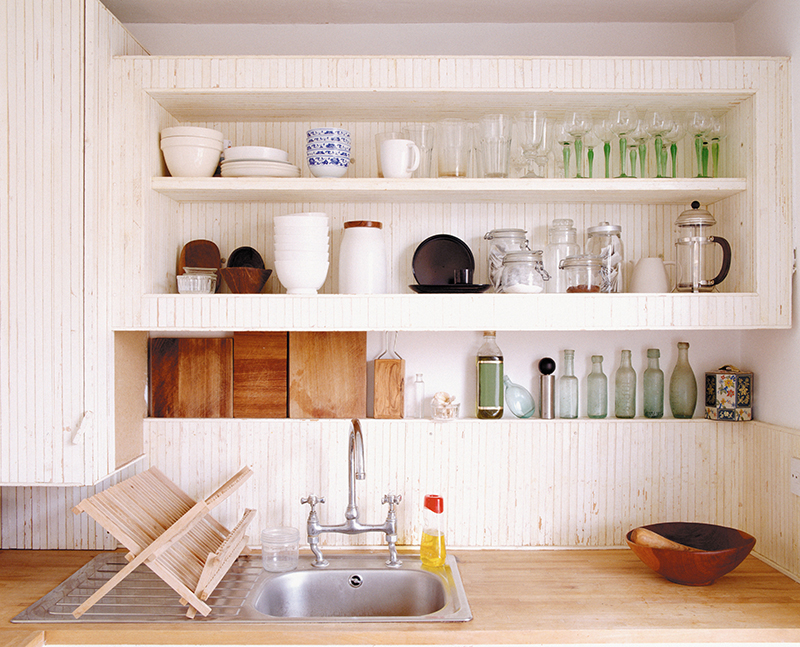
Vertical storage is a tried-and-true method of using space, and the kitchen holds some unique opportunities for making the most of it.

Hanging pot racks, magnetic knife strips, mounted dish-drying racks installed above the sink, and rods with hooks for towels, aprons, small tools and oven mitts are all excellent ways to keep clutter in its place — and keep the surfaces and lower area of the room free.
Find beautiful cleaning tools

The ugly truth is that a lot of everyday items just make sense to keep out — but that doesn’t mean they have to be such an eyesore.

Skip the plastic and get yourself a classic wooden broom, natural fiber dish brush and a glass soap dispenser. These items don’t cost much, but they add a softer look while also getting the job done.

Tap into change

Just because your place didn’t come equipped with a dishwasher doesn’t mean you have to suffer. Installing a quality faucet with a pull-down sprayer can make your chores less of a chore (and, as long as you swap it back before you move out, it shouldn’t violate your rental agreement).

Have space and the budget for something more? Portable dishwashers are a massive timesaver. From small countertop models to wheeled butcher-block-top options, there are sizes that fit into almost any space and require nothing more than your standard sink to function.

Live the island life

A kitchen island is a versatile tool for almost any space — even the tiniest micro apartments!

Whether you choose a larger center-of-the-room-style piece or a small butcher-block number, these additions create more counter space and storage, all in one piece.

Bonus: If your island has wheels, it can serve as a portable bar for your next party. (Hey, if we can call bingeing our favorite shows with a few of our closest friends a “party,” so can you.)

Light it up

Another timeless tip: Good lighting is everything.

If your kitchen is dedicated to getting things done and starting your day, invest in cool lighting — the kind that washes everything in a bright, sunlit glow. A refreshing, cooler light wakes us up and creates an invigorating feeling.

If you’re more of a romantic and enjoy taking your time in the kitchen, keep relaxing, warm lighting around so that you can let the day melt away as you sip your merlot.

For those who prefer a bit of both, app-enabled bulbs can customize the mood for any occasion, and some even use every color of the rainbow.

Think (temporarily) BIG

If there’s one common complaint about renting, it’s the stark white walls. Removable wallpaper adds a touch of personalization and won’t break the bank — or at least, it doesn’t have to.

To keep costs low, stick to one accent wall. Finding a large-scale print will make the space feel larger, and layering a sizable mirror on top will maximize the look and any light.

Curate unique displays

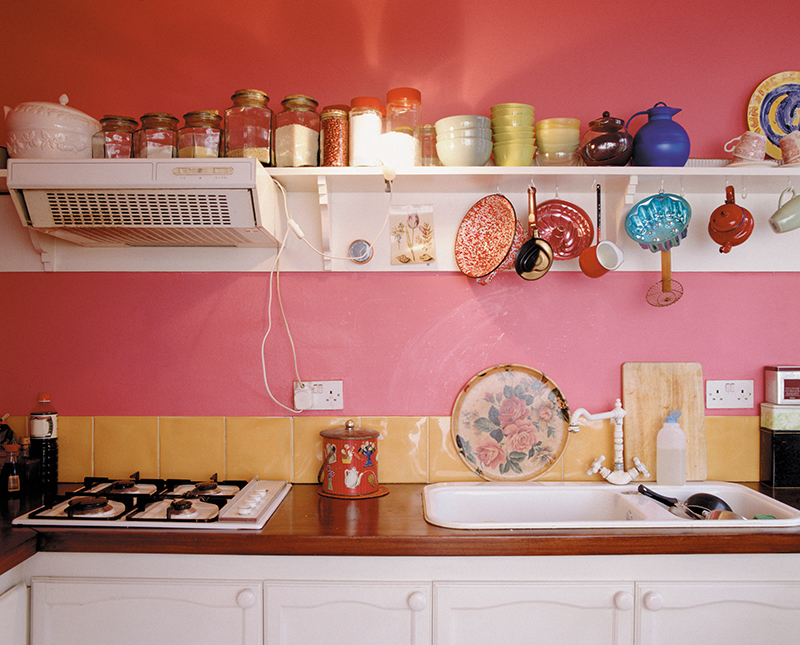
One of the best ways to keep an assortment of oddly shaped kitchen items is to dedicate either one section of the room (think: the top 12 inches of the walls) or one wall to showing them off.

Whether it’s your grandmother’s antique creamer collection or the jumble of cookie cutters that won’t fit into your drawers, making them into a vignette adds a layer of personalization to your space while also providing covert storage in plain sight. Easy-to-install hooks or some simple shelves are great ways to achieve this solution.
Keep it alive

Every room deserves a plant. Not only do they look good, but they also improve the quality of the air around them. If you don’t have the floor or counter space to spare, a hanging plant will do the trick.

No natural light in your kitchen? Or perhaps you’re better at killing plants than keeping them green? No matter — there are plenty of realistic artificial plants these days, which means everyone can benefit from the organic shapes of ferns, succulents and the ever-popular fiddle-leaf figs.

Have pets? Make sure to check the toxicity of your plants before choosing their placement.

No matter how uniquely challenging your space might be, there are solutions waiting for you to find them.

Facebooktwitterpinterestlinkedin

Smart-Home Gadgets Buyers Will Pay Extra to Have | #Today’sGadgets #TalkToYourAgent #SiliconValleyAgent #YajneshRai #YourAgentMatters #01924991

Facebooktwitterpinterestlinkedin

Smart-Home Gadgets Buyers Will Pay Extra to Have | Realtor Magazine

More builders are outfitting newly constructed homes with smart-home technology, and many buyers say they’ll pay extra for it, according to research from John Burns Real Estate Consulting. Sixty percent of home shoppers say they’d spend more on a home with a smart thermostat, the consulting firm’s survey of more than 23,000 shows. Slightly more—67 percent—say they’d pay extra for an oversized kitchen.


Person using smart-home app

© Westend61/Getty Images


More than 60 percent of new-home buyers also say they’d pay more for an exterior security camera and smart locks.

In a separate John Burns survey of more than 300 home builders, 53 percent say they incorporate smart-home technology into new construction. Even so, 42 percent of buyers say they would purchase additional technology.

John Burns Real Estate Consulting found some differences among certain segments of buyers regarding which smart-home tech they find most attractive, including:

  • Young singles and couples: most likely to choose smart thermostats.
  • Families: most likely to choose a smart garage that is responsive to app controls and voice commands.
  • Older buyers: most likely to pay extra to have smart locks.

Below, watch a presentation of Todd Tomalak, senior vice president of research at John Burns Real Estate Consulting, sharing more insights into the survey findings on the popularity of smart home tech.

Facebooktwitterpinterestlinkedin