Some Homeowners Don’t Know the Interest Rate They Pay | #InterestingFacts #TalkToYourAgent #SiliconValleyAgent #YajneshRai #YourAgentMatters #01924991

Facebooktwitterpinterestlinkedin

Some Homeowners Don’t Know the Interest Rate They Pay | Realtor Magazine

Nearly three in 10 mortgage borrowers either don’t know the rate they’re paying on their loan or decline to disclose it, according to a new survey by Bankrate. Consumers who don’t keep track of their mortgage rate may be making an expensive mistake, financial experts caution. “Most homeowners should know what their rate is,” says Martin Choy, operations manager at Westwood Mortgage in Seattle. “If they have an adjustable-rate mortgage, then they should contact their lender immediately and get their current rate.”

As mortgage rates inch higher, lenders are urging homeowners to check their rate and see if refinancing makes sense. As of July 11, the 30-year fixed-rate mortgage had increased to 4.7 percent from 4.13 percent a year ago, Bankrate reports.

The increase can have a big impact on monthly mortgage payments. For example, a $200,000 mortgage with a 4.7 percent interest rate can cost $119 more per month than the same mortgage with a 4.13 percent rate. Homeowners with adjustable-rate mortgages or fixed-rate mortgages may be able to lock in a lower rate if they’ve held the loan for a long time, financial experts say. “There are many variables in determining whether refinancing is a good option,” Choy says. “How much do you owe? How much is your house appraised for? Is your credit score good? If you’re in better financial shape now—both with your monthly debt ratio and credit score—than when you got your mortgage, then you could qualify for better rates.”

The cost to refinance can vary, but, on average, borrowers can expect to pay between 3 and 6 percent of their balance in refinancing fees, according to Bankrate.

Facebooktwitterpinterestlinkedin

A DIY for the Books: How to Get Custom Built-In Shelves on a Budget | #DIYShelves #TalkToYourAgent #SiliconValleyAgent #YajneshRai #YourAgentMatters #01924991

Facebooktwitterpinterestlinkedin

A DIY for the Books: How to Get Custom Built-In Shelves on a Budget

Built-in shelves can take your room from boring to bespoke in a snap. Unfortunately, they can also come with a hefty price tag.

But I’m going to share the insider secrets you need to DIY your way to rich results without breaking the bank. (Hint: The secret is starting with assembled bookcases, like the IKEA BILLY!)

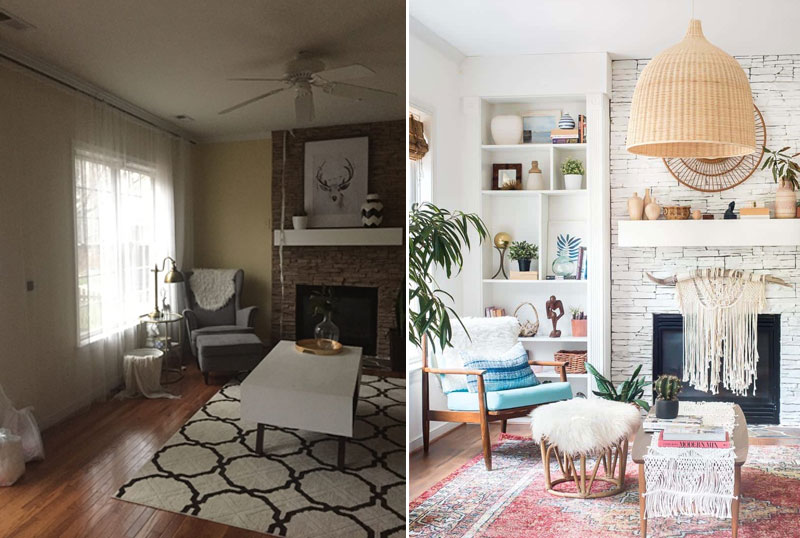
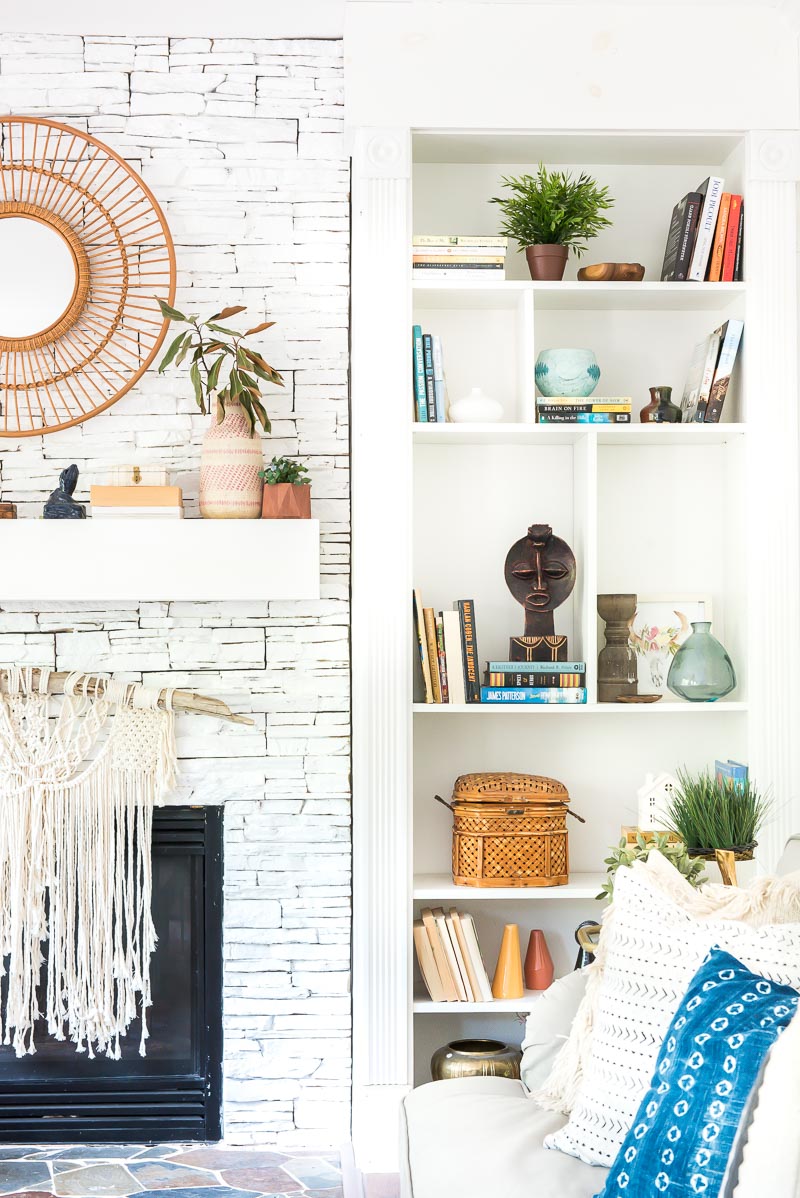
Check out this dramatic before and after:

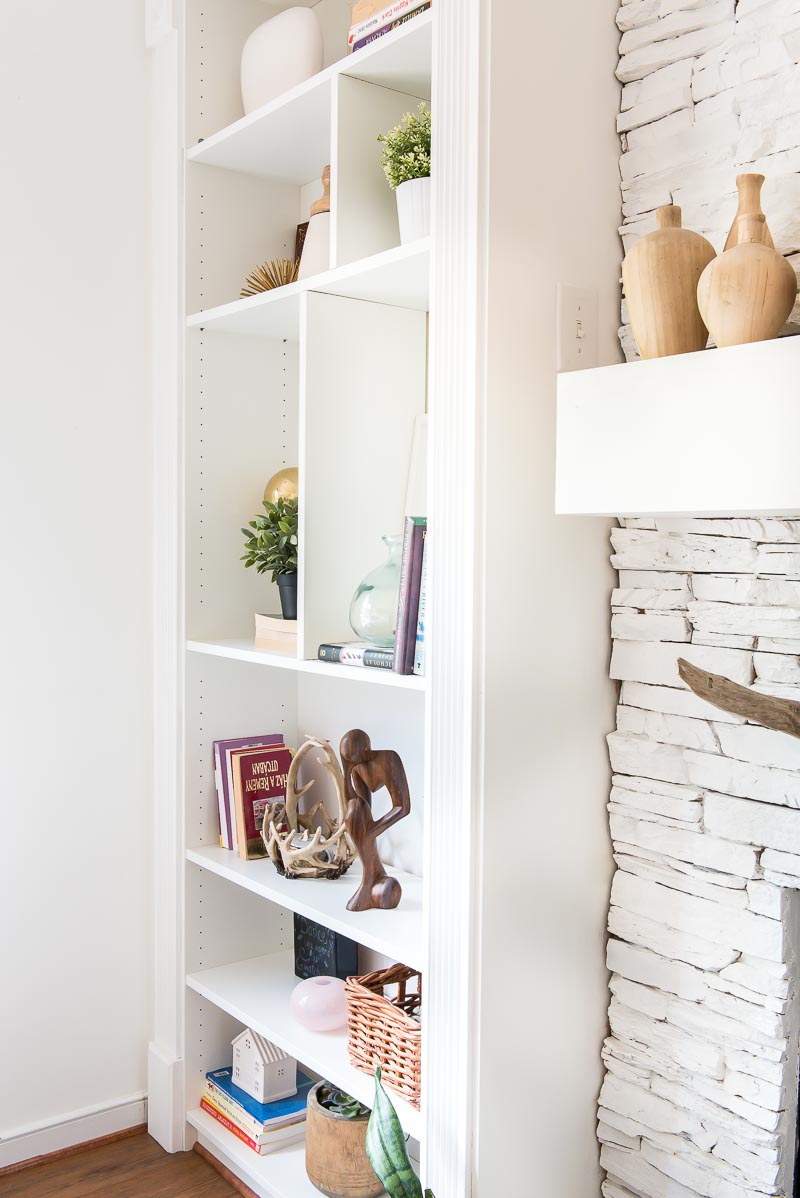
I still walk in sometimes and can’t even believe it’s the same room. Of course, there have been many other updates and projects to get this look, but the shelves definitely set the stage. 

Let’s get started!

Materials

Note: Always measure first to get your supplies right. Our measurements were not exactly equal, with a width of 41″ on one side of the fireplace and 43″ on the other. But we compensated with our build-out around it, and it made no difference at all.

  • Two BILLY bookcases with extension, or similar product
  • Two 1″ x 12″ x 6′ whitewood boards (for tops)
  • Two 1″ x 12″ x 10′ whitewood boards (for visible sides next to fireplace)
  • Two 1″ x 4″ x 12″ common boards (Each cut to length, then screwed into the wall studs flush behind each shelf for support. This compensates for the 1″ difference in the whitewood boards and BILLY bookcase depth)
  • 3″ drywall screws to attach common board to studs
  • Three 2″ x 4″ x 10′ boards (for hidden sides next to walls and for header frame)
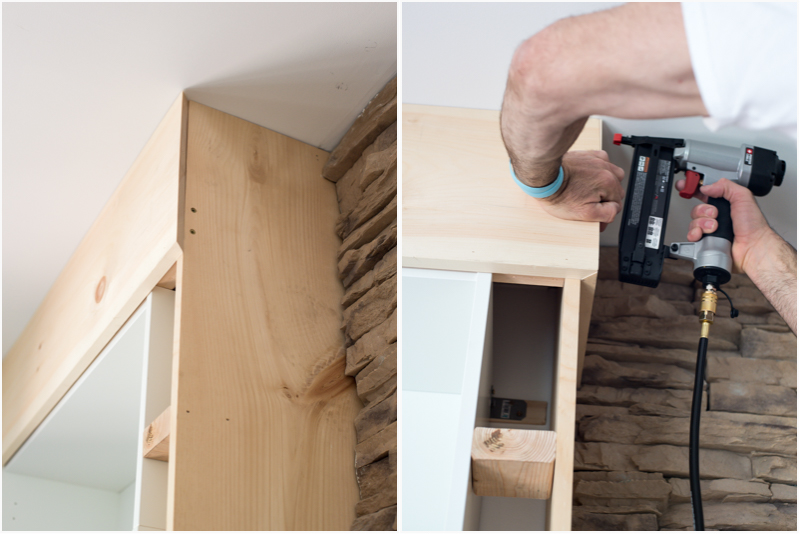
  • Eight 2″ x 4″ x 11″ pieces (to fill gaps between shelf and whiteboard on fireplace side)
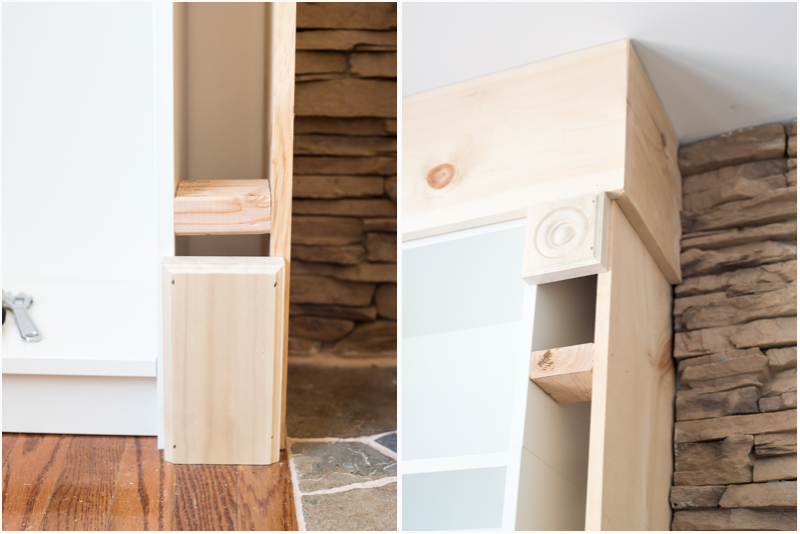
  • Four  4 1/4″ x 1 1/8″ x 9″ plinth blocks of choice
  • Four  4 1/4″ x 1 1/8″ x 4 1/4″ plinth blocks of choice
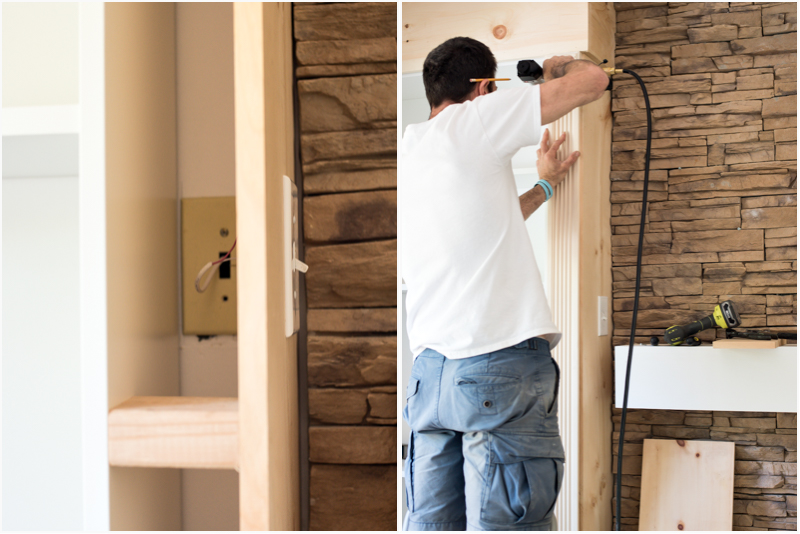
  • Four 15/32″ x 3 9/16″ x 96″ strips of millwork molding (to cover the left and right edges of each shelf)
  • Eight 1 1/2″ x 2″ x 1 3/8″ 18-gauge steel brackets and nails
  • Brad nails (or finish nails)

Tools

  • Miter saw or skill saw
  • Brad nailer (recommended)
  • Drill kit
  • Tape measure

Let’s build!

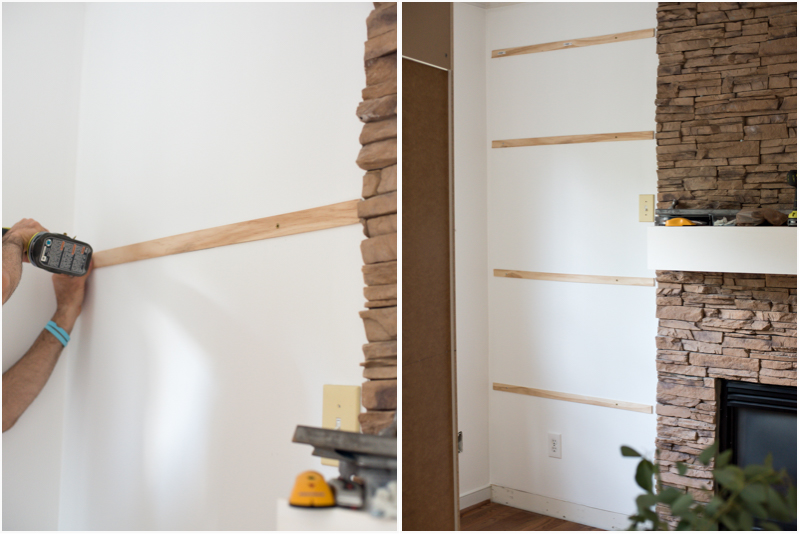
  1. Mark your studs, and screw the cut 1″ x 4″ common board to the wall and into the studs with the drywall screws, spaced every 6-12″. Space the strips a few feet apart from top to bottom to get the best support.

  1. Cut out the crown molding, shoe molding and baseboard if needed.
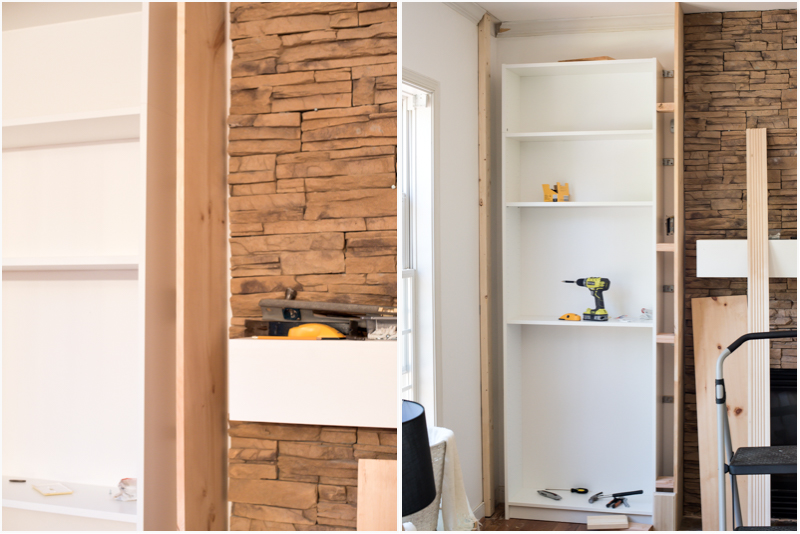
  2. Press the bookcases flush to the strips on the walls, center them and attach the steel brackets to the bookcases and the strips screwed to the walls.
  3. Measure (ceiling to floor) the wall side where you want the outer edge of your shelf.
  4. Cut the 2″ x 4″ to length and attach to the wall.
  5. Measure (ceiling to floor) the fireplace side where you want the edge of your shelf.
  6. Cut the 1″ x 12″ whiteboard to length and attach using 2″ x 4″ blocks to hold the gap.

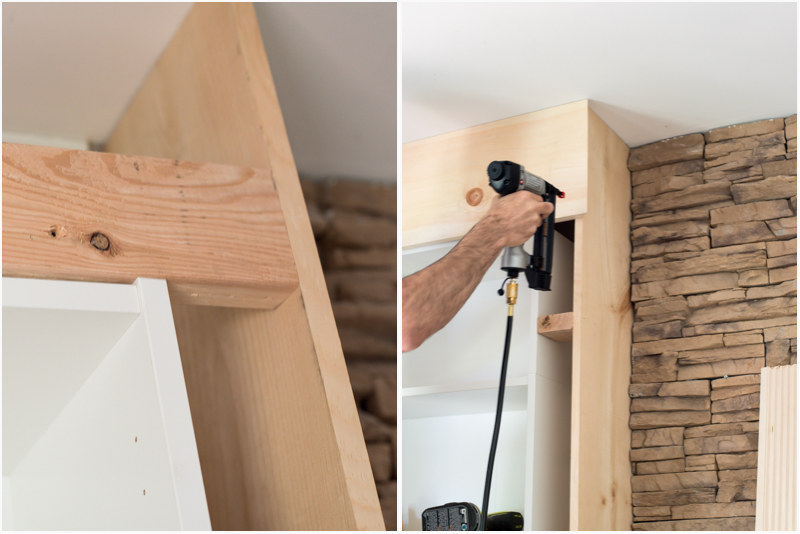
  1. Measure from the inside of the 2″ x 4″ to the inside of the 1″ x 12″ across the top of the bookcase. Cut another 2″ x 4″ to fit the space, and screw it in on each side.
  2. Measure and cut the 1″ x 12″ whiteboard designated for the top. Brad nail across the front first and then the side.

  1. Now place and brad nail the plinth blocks.

  1. Next, measure and cut the millwork to length, and brad nail that into place.

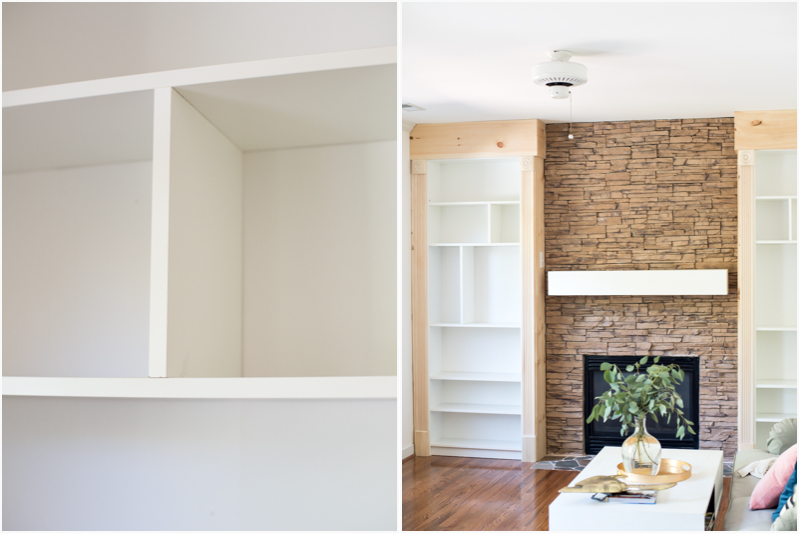
  1. Arrange shelves as desired. I cut a few in half to make the vertical breaks and used another 1″ x 12″ to fill the remaining longer gaps to my liking.

  1. Paint, stain and decorate as desired. Here’s our finished product!

Now it’s time to invite your friends over to enjoy your upgraded space and spoil you with compliments on the fruits of your labor … manual labor, but it was worth it, right?!

These are pretty much guaranteed to be a clutch selling feature if you do decide to put your house on the market. In the meantime, I hope you love your new custom built-in bookcases as much as I love mine!

Facebooktwitterpinterestlinkedin

7 Qualities of a Good Neighbor | #GoodNeighbor #TalkToYourAgent #SiliconValleyAgent #YajneshRai #YourAgentMatters #01924991

Facebooktwitterpinterestlinkedin

7 Qualities of a Good Neighbor

If you want good neighbors, you’ll first have to become one yourself. Master these seven techniques, and even you (yes, you!) can win the approval of your entire neighborhood.

1. Good neighbors bring cookies

Whether you’re new in town or haven’t kept in touch, a delivery of freshly baked goods is a perfect way to break the ice and let neighbors know that you’re thinking of them.

If cookies can keep Santa returning year after year with a bag full of loot, then surely they can train your neighbors to do your bidding. Consider the following scenario.

“Honey, somebody’s robbing the neighbor’s house again.”
“Wait, Janet. The ones who brought cookies yesterday?”
“Exactly. This time I’ll call the cops.”

2. Good neighbors rarely gossip

If your neighbor seems to know the dirt on everyone within a two-block radius, you can count on them to keep tabs on your personal life as well.

The next time Nosy Nellie gleefully describes the contents of the Rickenbacker’s trash again, move the conversation along by refocusing the conversation on her. “So, what are you growing in your garden this year?”

You aren’t in high school anymore, so preserve relationships with your neighbors and avoid the gratuitous gab fests.

3. Good neighbors share phone numbers

For such a connected age, you should really question why you don’t have your neighbors’ phone numbers. After all, what if they receive your package by mistake? What if the house floods while you’re on vacation? Worse yet, what if you need a babysitter?

If you feel uncomfortable bringing it up, ask during one of your cookie deliveries (you are following rule number one, right?) or right before a trip. Jot down your name, number and email address on a piece of paper and ask if your neighbor is comfortable sharing theirs.

4. Good neighbors help before they’re asked

The neighbor who says, “Let me know if you need anything,” probably isn’t going to help whenever you actually need something. You, on the other hand, are a good neighbor and genuinely want to help out.

To get ahead of the meaningless small talk, anticipate their needs. If they have kids and you’re comfortable babysitting, tell them up front. If they’re clearly struggling to mow the lawn during a heat wave, ask for the best time to stop by with your lawnmower.

5. Good neighbors are tidy

Even if you lack self-respect, respect the sensitive tastes of others and clean up your act.

Keep the ironic lawn ornaments to a minimum. Keep trash receptacles hidden in the side yard, or better yet, the garage.

Whenever you’ve finished gardening or landscaping for the day, put away your tools and bags of unused mulch. Rake the leaves and clean up grass clippings and all the other stuff your dad used to bug you about.

And if it’s not too much trouble, pressure wash and paint your house periodically.

6. Good neighbors mow the lawn

An unkempt and weedy lawn is embarrassing for your neighbors, so it should be embarrassing for you as well. Keeping it mowed every week or two is a good start, but it will take more than that to win the approval of the locals.

Trim the edge of your lawn regularly, fertilize on schedule and keep weeds to a minimum. Keep your foundation plantings simple, neatly trimmed and topped off with mulch.

If your neighborhood allows it, go the no-lawn method by planting swaths of low-maintenance, drought-tolerant ground covers. Crucially, don’t overdo it on the sprinklers — especially when it’s raining.

7. Good neighbors communicate

That old “good fences make good neighbors” quote had to come up at some point, right? A good neighbor must respect boundaries. That said, they should also be crossed when the fences themselves start losing pickets and falling over in a storm.

Even if it’s technically their fence, you might not be happy with the shoddy workmanship and resentment that you’ll have to live with when they get around to fixing it themselves.

Address shared interests like fences, drainage ditches and troublesome trees ahead of time so that you can work out a plan that both parties can agree to.

Oh, and don’t forget to bring cookies.

Facebooktwitterpinterestlinkedin

Home Shoppers Get ‘Extra Time to Find the Right Home’ | #MortgageRates #TalkToYourAgent #SiliconValleyAgent #YajneshRai #YourAgentMatters #01924991

Facebooktwitterpinterestlinkedin

Home Shoppers Get ‘Extra Time to Find the Right Home’ | Realtor Magazine


Mortgage rates for 30, 15, ARM. Full information at http://www.freddiemac.com/pmms/

Mortgage rates dropped slightly this week, but overall, they were mostly flat, offering some temporary relief to borrowers.

Mixed economic data this week prompted mortgage rates to remain in mostly a holding pattern, says Sam Khater, Freddie Mac’s chief economist. “Manufacturing output and consumer spending showed improvements, but construction activity was a disappointment,” Khater says. “This meant there was no driving force to move mortgage rates in any meaningful way, which has been the theme in the last two months. That’s good news for price-sensitive home shoppers, given that this stability in borrowing costs allows them a little extra time to find the right home.”

Freddie Mac reports the following national averages with mortgage rates for the week ending July 19:

  • 30-year fixed-rate mortgages: averaged 4.52 percent this week, with an average 0.5 point, dropping slightly from last week’s 4.53 percent average. Last year at this time, 30-year rates averaged 3.96 percent.
  • 15-year fixed-rate mortgages: averaged 4 percent this week, with an average 0.4 point, falling from last week’s 4.02 percent average. A year ago, 15-year rates averaged 3.23 percent.
  • 5-year hybrid adjustable-rate mortgages: averaged 3.87 percent, with an average 0.3 point, rising from last week’s 3.86 percent average. A year ago, 5-year ARMs averaged 3.21 percent.
Facebooktwitterpinterestlinkedin

3 Bathroom Trends Homeowners Might Want to Avoid | #ThingsToAvoidInBaths #TalkToYourAgent #SiliconValleyAgent #YajneshRai #YourAgentMatters #01924991

Facebooktwitterpinterestlinkedin

3 Bathroom Trends Homeowners Might Want to Avoid | Realtor Magazine

Bathroom makeovers can help enhance a property, but homeowners should be careful not to be too trendy or it may have the opposite effect. HouseLogic detailed several recent bathroom trends that homeowners might want to reconsider, including:

Tiny tiles

Mosaics of tiny colored tiles may be on-trend and offer a retro vibe to your bathroom, but they’ve also earned a reputation as being a pain to keep clean. Tiny tiles mean more grout to clean and maintain. Instead of doing a large space of tiny tiles, HouseLogic recommends using them as an accent, such as the wall surrounding your vanity. Choose a place where they won’t get wet on the floor, in the tub, or in the shower so that cleaning them is less of a chore.

Hardwood floors

The flooring may be a hot choice for the rest of your home, but they can be a pain in the bathroom. “It will warp next to a shower or tub if not dried after each use,” Tanya Campbell, a designer for Virdis Design Studio in Denver, told HouseLogic. “Also, tile is more sanitary.” If the wooden look is what you want, opt for something that resembles the exterior, but is actually tile.

Colored tubs and sinks

Color is gradually entering more bathrooms. But don’t forget the lessons from the 1950s pastel bathroom craze that brought in pink and aqua sinks. That had renovators ripping them out a few years later in favor of white, a safer choice for the long term. “The bathroom is one of the most expensive rooms in the house to do, and so I try to be very safe because the parts are going to be expensive to change out—like a tub,” Suzanne Felber, a designer in Dallas, told HouseLogic. If color is what homeowners want, opt for painting the walls instead; it’s easier to change later on.

Facebooktwitterpinterestlinkedin

What a New-Home Warranty Really Covers | #NewHomeWarranty #TalkToYourAgent #SiliconValleyAgent #YajneshRai #YourAgentMatters #01924991

Facebooktwitterpinterestlinkedin

What a New-Home Warranty Really Covers | Realtor Magazine

A new home will often come with a warranty from the builder, but that doesn’t mean the builder is on the hook for anything that breaks. Warranties differ from builder to builder, but they typically cover only specific features such as:

  • Concrete foundations and floors
  • Clapboard and shingles
  • Carpeting
  • Thermal and moisture cover
  • Waterproofing
  • Insulation
  • Roofing and siding
  • Doors and windows
  • Garage doors
  • Plumbing
  • Electrical
  • Heating and cooling
  • Septic system

Builder warranties usually last anywhere from six months to two years. Some last up to 10 years to cover “major structural defects.”

However, many builder warranties do not cover:

  • Household appliances
  • Shrinkage or expansion of the house
  • Shrinkage of joints and minor cracking
  • Insect damage
  • Dampness or condensation caused by inadequate ventilation

“A builder warranty can give a false sense of security to home buyers, so you need to be careful,” says Robert Pellegrini Jr., president of PK Boston, a real estate law firm in Massachusetts. Pellegrini recommends that a real estate attorney look over the sale contract. “It’s a significant negotiation; the builder wants to be responsible for essentially nothing, and it’s in the buyer’s best interest to have the builder on the hook for as much as possible,” he says.

Pellegrini says it’s important for new-home buyers to know the length of the warranty and what’s included and to learn how to notify the builder if something goes wrong during the warranty period. He says the biggest issue with warranty coverage is the cause of the problems the homeowner wants the builder to cover. “Was the damage due to neglect during building or to misuse by the homeowner?” Pellegrini says.

Facebooktwitterpinterestlinkedin

How Much More Buyers Are Paying for a Mortgage | #MortgageMatters #TalkToYourAgent #SiliconValleyAgent #YajneshRai #YourAgentMatters #01924991

Facebooktwitterpinterestlinkedin

How Much More Buyers Are Paying for a Mortgage | Realtor Magazine

Higher mortgage rates and rising home prices are making housing more expensive for homeowners this year compared to last year. In San Jose, Calif., for example, the average homeowner is paying $500 more for monthly mortgage payments than a year ago, jumping from $4,100 to $4,600, according to a new analysis by Bloomberg.

In nearly one-third of metro areas, buyers paid an average $50 hike in monthly mortgage payments in the first quarter of the year. The cities seeing the fastest increases in mortgage payments, according to the Bloomberg study, are:

  • San Francisco
  • Seattle
  • Portland, Ore.
  • Jacksonville, Fla.
  • Bridgeport-Stamford-Norwalk, Conn.

Renters are facing steep hikes in costs, too. Researchers found that more than 10 percent of all metro areas analyzed saw rents rising faster than inflation. Eight of the top 20 priciest markets are in California, with San Jose, San Francisco, and Los Angeles making the top three.

“By many metrics, the U.S. housing market in 2018 is on sound footing,” says Chris Herbert, managing director of the Harvard Joint Center for Housing Studies. But “in many respects, the situation has worsened for both the lowest-income Americans and those higher up the income ladder.”

In the first three months of 2018, home and rental prices in more than one-fifth of metro areas took more than 30 percent of a household’s income. In nine metro areas, aggregate housing costs comprised 50 percent of income (eight of which were located in California).

Facebooktwitterpinterestlinkedin

The Do’s and Don’ts of Home Equity Loans | #HomeEquityLoans #TalkToYourAgent #SiliconValleyAgent #YajneshRai #YourAgentMatters #01924991

Facebooktwitterpinterestlinkedin

The Do’s and Don’ts of Home Equity Loans

Home equity burning a hole in your pocket? You may want to think twice about that boat.

Home equity is a valued resource, and if you have it, you might be tempted to tap that wealth for other purposes. A home equity loan, which allows you to use your home’s equity as collateral, is a great way to do this. But depending on your personal situation, it may not be the right thing to do.

Here’s when a home equity loan makes sense — and when it doesn’t.

DON’T: Fund a lifestyle

Remember when homeowners yanked cash out of their homes to fund affluent lifestyles they couldn’t really afford? These reckless borrowers, with their boats, fancy cars, lavish vacations and other luxury items, paid the price when the housing bubble burst. Property values plunged, and they lost their homes.

Lesson learned: Don’t squander your equity! Look at a home equity loan as an investment — not as extra cash when making spending decisions.

DO: Make home improvements

The safest use of home equity funds is for home improvements that will add to the home’s value. If you have a one-time project (e.g., a new roof), then a home equity loan might make sense.

If you need money over time to fund ongoing home improvement projects, then a home equity line of credit (HELOC) would make more sense. HELOCs let you pay as you go and usually have a variable rate that’s tied to the prime rate, plus or minus some percentage.

DON’T: Pay for basic expenses or bills

This is a no-brainer, but it’s always worth reiterating: Basic expenses like groceries, clothing, utilities and phone bills should be a part of your household budget.

If your budget doesn’t cover these and you’re thinking of borrowing money to afford them, it’s time to rework your budget and cut some of the excess.

DO: Consolidate debt

Consolidating multiple balances, including your high-interest credit card debts, will make perfect sense when you run the numbers. Who doesn’t want to save potentially thousands of dollars in interest?

Debt consolidation will simplify your life, too, but beware: It only works if you have discipline. If you don’t, you’ll likely run all your balances back up again and end up in even worse shape.

DON’T: Finance college

If you have college-age children, this may seem like a great use of home equity. However, the potential consequences down the road could be significant. And risky.

Remember, tapping into your home equity may mean it takes longer to pay off the loan. It also may delay your retirement or put you even deeper in debt. And as you get older, it will likely be more difficult to earn the money to pay back the loan, so don’t jeopardize your financial security.

Facebooktwitterpinterestlinkedin

Mortgage Rates Continue to Slide This Week | #InterestRates #TalkToYourAgent #SiliconValleyAgent #YajneshRai #YourAgentMatters #01924991

Facebooktwitterpinterestlinkedin

Mortgage Rates Continue to Slide This Week | Realtor Magazine


Mortgage rates for 30, 15, ARM. Full information at http://www.freddiemac.com/pmms/

Mortgage rates were mostly in a holding pattern this week, but still eked out the first increase since early June.

Overall, mortgage rates this summer have been dropping the past few weeks after sharp rises this spring. “A record number of people quit their job last month, most likely for a new opportunity with higher wages and better benefits,” says Sam Khater, Freddie Mac’s chief economist. “This positive trend, along with these lower mortgage rates, should increasingly give some previously priced-out prospective home buyers the financial wherewithal to resume their home search.”

Freddie Mac reports the following national averages with mortgage rates for the week ending July 12:

  • 30-year fixed-rate mortgages: averaged 4.53 percent for the week, up from last week’s 4.52 percent average. Last year at this time, 30-year rates averaged 4.03 percent.
  • 15-year fixed-rate mortgages: averaged 4.02 percent this week, up from last week’s 3.99 percent average. A year ago, 15-year fixed-rates averaged 3.29 percent.
  • 5-year hybrid adjustable-rate mortgages: averaged 3.86 percent this week, down from 3.74 percent a week ago. A year ago, 5-year ARMs averaged 3.28 percent.
Facebooktwitterpinterestlinkedin

4 Costly (and Dangerous) Pool Care Mistakes | #PoolMaintenance #TalkToYourAgent #SiliconValleyAgent #YajneshRai #YourAgentMatters #01924991

Facebooktwitterpinterestlinkedin

4 Costly (and Dangerous) Pool Care Mistakes | Realtor Magazine

A pool can be a selling point for a home, but proper care is key. Some homeowners could be going about their pool maintenance all wrong, which could result in costly leaks or even skin irritations to those who jump in. An article at realtor.com® recently highlighted some common slip-ups, including:

Using the wrong chemicals
Mixing the wrong chemical balance can cause eye and skin irritation and deteriorate the materials in the pool, which can lead to leaks. “The biggest mistake that pool owners make is not putting in the proper chemicals,” Craig Cohen, president of Treasure Pools & Service in West Palm Beach, Fla., told realtor.com®. Experts urge owners to take a sample of their pool water to a local pool store—even on a monthly basis—for an analysis to determine which chemicals they’ll need to adjust.

Failing to clean the filters
Cohen suggests cleaning the filter once a month. He also recommends having two filters so the pool never goes without a clean one.

Only servicing the pool when it’s hot
A pool will likely need year-round service. A professional checkup in the spring, for example, will inspect the pool for pipe damage and tears in the pool liner to ensure there was no damage from the colder winter months. In the fall, owners will likely want to have their pool winterized, which means ensuring all the water has been removed from the pipes to avoid a breakage if the water freezes.

Not putting up a fence
Fences around a pool can be important to keep animals out of the water. Note that fences are likely mandated by the state. This can vary dependent on the area, but many local governments require a 4-foot fence around the pool.

Facebooktwitterpinterestlinkedin