First-Time Buyers Account for More Mortgages | #FirstTimeBuyers #TalkToYourAgent #SiliconValleyAgent #YajneshRai #YourAgentMatters #01924991

Facebooktwitterpinterestlinkedin

First-Time Buyers Account for More Mortgages | Realtor Magazine

First-time home buyers are flocking to the real estate market in larger numbers, comprising 46 percent of mortgages backed by Freddie Mac—excluding refinancings—that were issued in the first quarter of this year. That marks the largest quarterly share that Freddie Mac has recorded, dating back to 2012. 

“This is a millennial-driven rise,” Sam Khater, Freddie Mac’s chief economist, told Bloomberg. “You’ve got a strong economy that’s helping, along with the appetite of the financial market to invest in mortgages.” 

Younger buyers may be motivated to buy due to the easing of credit in recent months as well as an improving job market. They also may be motivated to buy as rents rise and as increasing home prices and mortgage costs threaten to price them out of homeownership if they don’t act soon, Bloomberg reports. 

The National Association of REALTORS® reports that the median age of first-time buyers is 32 years old. 

Facebooktwitterpinterestlinkedin

The Counteroffer: Negotiating a Real Estate Deal | #RealEstateNegotiations #TalkToYourAgent #SiliconValleyAgent #YajneshRai #YourAgentMatters #01924991

Facebooktwitterpinterestlinkedin

The Counteroffer: Negotiating a Real Estate Deal

Buying a home is rarely as simple as making an offer and paying that offer out. Negotiations can go back and forth for weeks before the seller and buyer are both satisfied.

The vehicle for this negotiation is the counteroffer — a vital and complex rejection and counter to an offer made by either party. Counteroffers are typically handled between real estate agents and are time sensitive.

Selling or buying a home is more of a process than a transaction, so it’s important to understand counteroffers before you make your first offer.

Why was I countered?

As a home buyer, if you make an offer below list price, the seller may choose to reject, accept or simply let the offer expire. If there are multiple offers, the listing agent will lay out the options for their client and then notify all buyers’ agents of the choices.

Sellers may also counter your proposed closing date. If they need to move out quickly, they may want to push it earlier. They may also ask to rent the property for a time after the settlement.

Price and closing date negotiations are common from both parties, but there are even more reasons sellers can potentially get countered.

The condition of the home is likely the biggest factor here. As home buyers conduct ongoing research into the home, any problems with the condition of the house can result in a counteroffer.

If you’ve chosen to take appliances with you when you move, buyers may also look to negotiate for those.

Appraisals are another reason for counteroffers. If an appraisal comes in below the agreed-upon sale price, it will affect the amount the mortgage company will lend to the buyer.

Negotiation power

When reviewing a counteroffer, it’s important to have an experienced real estate agent who can capitalize on your advantages in a negotiation. Both sellers and buyers can take steps to put themselves in an advantageous position through planning and smart counteroffers.

Knowledge is power in negotiations, so try to glean as much information about the seller or buyer as you can. Your agent will also seek information from the other agent on your behalf.

Sometimes sellers use the pending sale of their home to finance another, meaning they have a truncated timeline and could be more eager to make a deal. Similarly, buyers who have terminated a lease may be desperate for a place to live and more willing to negotiate.

If you’re selling a home with known issues, anticipate how these problems may put you at a disadvantage during negotiations. A leaky roof may not be discovered until after buyers order a home inspection. Depending on the cost, they may ask the seller to either fix the roof or deduct the cost of a new roof from the sale price.

These types of issues put sellers at a distinct disadvantage because they have to either pay for repairs, lower the selling price, or reject the counteroffer and hope the next buyer doesn’t notice or care about repairs.

This is why it’s worth the money (around $500) to pay for an inspection before listing a house. Preparation can save you headaches and money down the road.

Responding to a counteroffer

If you’ve received a counteroffer as a buyer or a seller, carefully review every aspect. Real estate agents, apart from yours, are under no obligation to ensure you read the full contract. So make sure you read everything carefully before you sign.

With each individual counteroffer, consider every aspect of the sale, including old and new information. If you made an offer above the list price, there is always the possibility for an appraisal to come in low.

If you are responding to a counteroffer before an appraisal or inspection, keep those at the forefront of your mind. Prepare yourself for future counteroffers once they are completed.

Whether you’re selling or buying a home, establish a baseline for when you will walk away from a sale. As a buyer, you don’t want to spend so much on a home that you move in with no cash for improvements and repairs. And as a seller, you should know how much you want to make off the sale.

With a measured and informed approach, counteroffers can be your friend. Communicate often with your agent to let them know what you want from the sale, and never be afraid to walk away if things go south.

Facebooktwitterpinterestlinkedin

Redfin Housing Demand Index Posted Slight Decline from March to April Amid Ongoing Inventory Crunch | #SomeSofteningSeen #TalkToYourAgent #SiliconValleyAgent #YajneshRai #YourAgentMatters #01924991

Facebooktwitterpinterestlinkedin

Redfin Housing Demand Index Posted Slight Decline from March to April Amid Ongoing Inventory Crunch – @Redfin

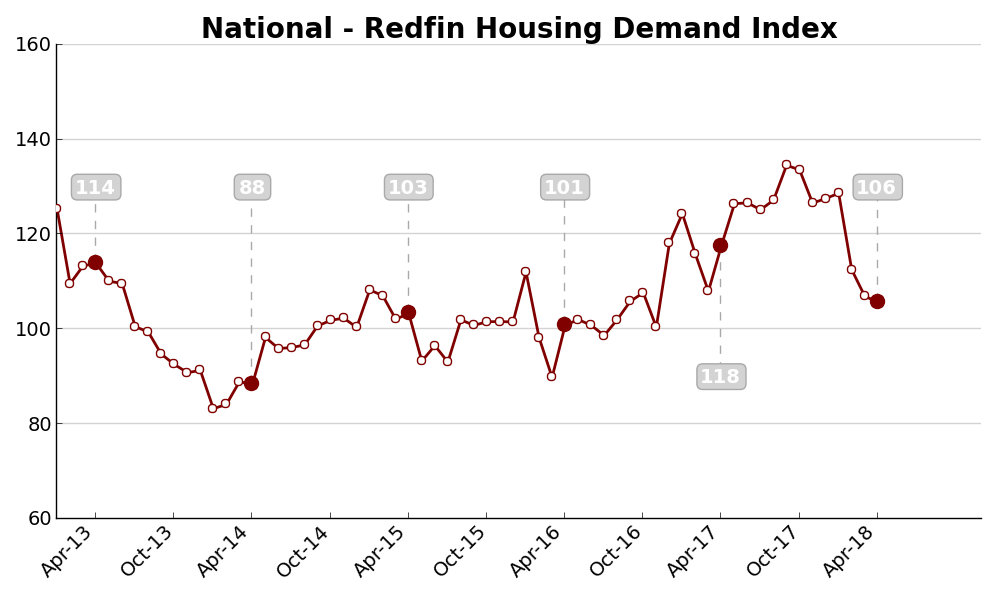
The Redfin Housing Demand Index fell 1.3 percent month over month to 106 in April, the third consecutive month of declines.

The Demand Index is based on thousands of Redfin customers requesting home tours and writing offers. The Demand Index is adjusted for Redfin’s market share growth. A level of 100 represents the historical average for the three-year period from January 2013 to December 2015April Demand Index

“April was the first time in 27 months that we saw a year-over-year decline in the number of customers touring homes,” said Redfin chief economist Nela Richardson. “We believe this was driven by the low levels of new listings in March. However, April’s 6.6 percent increase in new listings is a positive turn for homebuyers and bodes well for May and June home sales.”

From March to April, the seasonally adjusted number of buyers requesting home tours dropped 1.4 percent, while the number of buyers making offers fell 1.8 percent.

Looking at year-over-year comparisons, the Demand Index declined 11.5 percent from April 2017. The number of buyers requesting home tours dropped 3.7 percent year over year, and the number of buyers making offers fell 22.1 percent.

Across the 15 metros covered by the Demand Index, the number of homes for sale fell 7.3 percent year over year in April, the 35th consecutive month of falling supply. However, newly listed homes for sale increased 6.6 percent in April compared to a year earlier.

Facebooktwitterpinterestlinkedin

13 Simple Steps to Prep Your Home for the Best Summer Ever | #SummerHomeTips #TalkToYourAgent #SiliconValleyAgent #YajneshRai #YourAgentMatters #01924991

Facebooktwitterpinterestlinkedin

13 Simple Steps to Prep Your Home for the Best Summer Ever

Summer will be here before you know it, and you know what that means: Heat, hornets and yard work.

If you’re starting to miss spring already, fear not. Here are some quick projects to make your home and garden more comfortable and cost-effective this summer.

Inside the house

  • Service the air conditioning. Nothing can ruin your day like a broken air-conditioning unit on a summer day, so keep it running smoothly by servicing it every spring. Every three months, change the filter, flush out drain lines with a cup of bleach, and ensure that the outdoor unit has room to breathe by keeping vegetation about an arm’s length away.
  • Replace smoke detector batteries. You’d be surprised at how much peace of mind you’ll get after knocking out this one little chore. Change all the batteries on the same day and remind yourself to do it again in six months. If your smoke alarms were manufactured 10 or more years ago, replace them entirely.
  • Rotate ceiling fan blades. Your ceiling fan may have a switch that changes the direction in which the blades turn. If so, make sure that the blades are spinning counterclockwise and pushing air down, rather than up.
  • Clean behind appliances. You’ve been putting it off for far too long. You’re terrified of the horrors that await in the shadows of your kitchen, but it’s time to put on some gloves, arm yourself with disinfectant cleaner and roll out the oven with a brave face.
  • Clean dryer vents. If your clothes come out of the dryer damp and musty lately, it’s probably because the vent is clogged with lint — not only wasting energy, but posing a significant fire risk. To do it right the first time, purchase a vent-cleaning kit. Its flexible rod and brush attaches to your drill and will extract a puppy-sized mass of lint in no time.
  • Upgrade your thermostat. Replacing your existing thermostat with a ‘smart’ model does more than save you money. They respond to your voice, divert cool air to occupied rooms, can be operated from your phone and might even give you a weather forecast at a glance before work.
  • Repot houseplants. Give houseplants fresh potting mix in spring when they’re actively growing. Slip the mass of roots and potting mix out of the pot, gently tease apart the roots, remove rotted pieces and replace it with fresh and fertile potting mix. If the leaves are turning pale from too much direct summer sun, move them to a slightly shadier place.

Out in the yard

  • Patch your lawn. If you wait too long to plant new grass seeds or sod, aggressive weeds will happily fill the gaps for you. Luckily, grass will quickly establish if you remove all existing weeds beforehand, amend with topsoil and keep the area irrigated for the first week or two.
  • Inspect gutters and downspouts. Fall isn’t the only time to clean out the gutters, especially if you have messy trees nearby. Make sure that the gutters are soundly attached to your roof, seal any gaps with silicone caulk and remove any obstructions at the base of the downspout.
  • Inspect sprinklers. If you notice any clogged or broken sprinkler heads, shut off the water and dig a 2-inch diameter hole around the head. Unscrew the head from its riser and replace with a new one. If the head is merely clogged, remove the basket and rinse both it and the head in clean water. Reassemble the head and screw it onto the riser.
  • Get your mower up and running. Give your mower, string trimmer and other lawn equipment some TLC before the summer mowing season begins. After removing the spark plug, replace the air filters, change the oil, sharpen blades and give your equipment a good cleaning.
  • Remove hornet nests. If you have hornets, yellow jackets and paper wasps around your home, take steps to remove them now before they form a large, aggressive colony. You can play it safe by calling a professional, or spray nests at night when they’re less active. Just be sure to wear protective eyewear, a mask, pants and long sleeves.
  • Clean the grill. Prevent flare-ups and cooking fires by giving your grill a good cleaning. Ideally you’d clean after every use, but you can start fresh with a grill brush, nozzle and wet rag. Now is also a good time to stock up on charcoal and make sure your tools are ready for grilling season.
Facebooktwitterpinterestlinkedin

The Top Landscaping Trends for 2018 | #LandscapingTrends #TalkToYourAgent #SiliconValleyAgent #YajneshRai #YourAgentMatters #01924991

Facebooktwitterpinterestlinkedin

The Top Landscaping Trends for 2018 | Realtor Magazine

Native plants, outdoor yoga spaces, and charging stations are among the hottest landscaping trends growing in consumer demand for 2018, according to a new report released by the American Society of Landscape Architects. Landscape architects were asked to rate the popularity of several residential outdoor design elements. Landscape architects noted a growth in the use of native plants, low-maintenance landscapes, and flexible-use spaces, for yoga classes or movie night. 

Overall, landscape architects ranked the following outdoor design elements as the overall most popular in 2018: 

  1. Fire pits/fireplaces
  2. Lighting
  3. Seating/dining areas
  4. Outdoor furniture
  5. Outdoor kitchens
  6. Decking (i.e. rooftop decking)
  7. Grills
  8. Movie/TV/video theaters, wireless/internet, stereo systems
  9. Outdoor heaters
  10. Stereo systems
  11. Pools and spa features (hot tubs, Jacuzzis, whirlpools, indoor/outdoor saunas)
  12. Utility storage
  13. Hammocks
  14. Outdoor cooling systems (including fans)
  15. Showers/baths
Facebooktwitterpinterestlinkedin

Mortgage Rates Retreat From 7-Year High | #SomeRateRelief #TalkToYourAgent #SiliconValleyAgent #YajneshRai #YourAgentMatters #01924991

Facebooktwitterpinterestlinkedin

Mortgage Rates Retreat From 7-Year High | Realtor Magazine


After climbing to their highest level in more than seven years, mortgage rates eased a bit this week. It was the first time they declined in four weeks, says Sam Khater, Freddie Mac’s chief economist. The 30-year fixed-rate mortgage fell 10 basis points to a 4.56 percent average this week. 

“The decline was driven by recent trade and geopolitical issues, which led to a sudden decrease in long-term Treasury yields,” Khater says. “Meanwhile, confident American consumers shrugged off the market volatility, as purchase mortgage applications continue to trend higher from a year ago.” 

But even with higher rates this year, Khater believes demand from home buyers will stay elevated as long as job growth and other economic fundamentals stay strong. 

“Extremely low inventory conditions in most markets are preventing sales from breaking out while also keeping price growth elevated,” Khater says. “Even if rates climb closer to 5 percent, sales have room to grow more—but only if current supply levels start increasing more meaningfully.” 

Freddie Mac reports the following national averages with mortgage rates for the week ending May 31: 

  • 30-year fixed-rate mortgages: averaged 4.56 percent, with an average 0.4 point, down from last week’s 4.66 percent average. Last year at this time, 30-year rates averaged 3.94 percent.
  • 15-year fixed-rate mortgages: averaged 4.06 percent, with an average 0.4 point, dropping from last week’s 4.15 percent average. A year ago, 15-year rates averaged 3.19 percent. 
  • 5-year hybrid adjustable-rate mortgages: averaged 3.80 percent, with an average 0.3 point, dropping from last week’s 3.87 percent average. A year ago, 5-year ARMs averaged 3.11 percent. 

Source: Freddie Mac

Facebooktwitterpinterestlinkedin

Drop in Rates Still Doesn’t Budge Loan Demand | #RateDropDemandStays #TalkToYourAgent #SiliconValleyAgent #YajneshRai #YourAgentMatters #01924991

Facebooktwitterpinterestlinkedin

Drop in Rates Still Doesn’t Budge Loan Demand | Realtor Magazine

Mortgage rates eased last week following recent increases, but would-be home buyers or refinancers didn’t bite. Total mortgage application volume, which reflects for refinancings and home buying, dropped 2.9 percent last week on a seasonally adjusted basis, the Mortgage Bankers Association reported Wednesday. This marked the sixth consecutive week of losses in applications. 

Mortgage application volume is now 10 percent lower than a year ago, the MBA reports. 

Refinance volume made up most of the drop last week, falling 5 percent week over week and reaching the lowest level since December 2000. Refinance volume was nearly 27 percent lower than a year ago, when mortgage rates were much lower. 

Mortgage applications for home purchases dropped 2 percent last week but remain 2 percent higher compared to a year ago, the MBA reports. 

The 30-year mortgage rate averaged 4.84 percent last week, down from 4.86 percent the previous week. 

“Rates slipped slightly over the week as concerns over U.S. trade policy and global growth sent some investors back to safer U.S. Treasurys,” says Joel Kan, a spokesman for the Mortgage Bankers Association. “Minutes from the most recent FOMC meeting also yielded a more dovish tone, which added to the downward pressure in rates.”

Facebooktwitterpinterestlinkedin

Even with mortgage rates up buying instead of renting makes sense for many – MarketWatch | #BuyerMakesSense #TalkToYourAgent #SiliconValleyAgent #YajneshRai #YourAgentMatters #01924991

Facebooktwitterpinterestlinkedin

Even with mortgage rates up buying instead of renting makes sense for many – MarketWatch

The spring home-buying season is in full swing, but the landscape has changed a lot from last year. Congress has curtailed tax incentives to purchase a home, mortgage rates are up and homes are more expensive. Yet, for many folks, buying a home is still better than renting.

The new tax law doubles the standard deduction to $24,000 for couples and caps deductions for state and local taxes at $10,000. Those greatly limit the tax incentive to purchase a home instead of renting. Zillow estimates homeowners who will take deductions and list mortgage interest and property taxes will fall from 44% to 14%.


Economists estimate this will reduce purchase offers enough to lower median housing prices by about 4% in more expensive cities, but that has yet to become apparent in the data.

Tax law changes were in focus by December and we have resale pricing data available through February. In the top 20 metro areas — and in particular in San Francisco, Los Angeles, San Diego and New York City — year-over-year price increases were about the same or greater than a year ago.

Most home buyers have more disposable income to pay mortgages. In their take-home pay, a higher standard deduction compensates them for not taking interest and property tax deductions, and lower rates overall actually boost most taxpayers’ buying power.

In hot markets like New York, foreign buyers, who for a variety of reasons pay cash and are simply parking wealth in the United States, have played a big role in elevating prices. U.S. personal income tax laws have few consequences for that behavior.

The FreddieMac average for a 30-year fixed-rate mortgage is currently about 4.6% — up from about 4% a year ago. For a $300,000 mortgage, that adds about $150 to monthly payments but landlords are paying more to finance apartment buildings too and that gets factored into rents.


How long a purchaser plans to stay in a home remains a key factor, because closing costs, realtors’ fees, and the like significantly raise the initial cost of owning a home — even if you can roll these costs into the mortgage balance to stretch those out.

Employing a calculator on the Trulia website, I examined the buying vs. renting tradeoff for the Washington metro area with a 30-year mortgage, a 4.6% interest rate and 20% down payment. The formula also factors in higher utility costs associated with home ownership, and expected inflation and rent increases.

If the home is occupied for at least 4 or 5 years, owning beats renting even without a mortgage interest deduction.

Read: 5 things to know about investing in single-family rental homes

Families could instead invest their down payments in stocks, which at first glance appear to be the better bet. From 2000 to 2017, equities as measured by the S&P 500 SPX-1.54%  were up an average of 5.3% annually, whereas homes appreciated 3.9%.


In recent years, appreciation as measured by the S&P Core-Logic Case-Shiller Indexes for top 20 markets and overall nationally indicate an accelerating pace of home appreciation — rising steadily from 4.4% in 2014 to about 6.5% in 2017.

Tougher zoning in and around cities where major employers are located, rising material costs and a slow pace of productivity growth in home building combine to make additions to the single-family housing stock slow. With millennials finally pushing into the house market, continued appreciation beating the historical trend and competitive with stocks can be expected.

Also, homeowners will have their full equity working for them, as opposed to just their down payments.

Homeowners enjoy more flexibility — they can modify and add to their homes to fit the circumstances of their families and personal preferences — and stability — they don’t have to fret about a landlord selling to a new owner who might want to repurpose the building.

Owning a home in a good neighborhood — not necessarily a rich area but one that is stable and has good employers within commuting distance — has proven one of the most reliable ways for ordinary folks to save and invest.

Facebooktwitterpinterestlinkedin

4 Surprising Things That May Increase How Much Your Home Is Worth | #CoolFacts #TalkToYourAgent #SiliconValleyAgent #YajneshRai #YourAgentMatters #01924991

Facebooktwitterpinterestlinkedin

4 Surprising Things That May Increase How Much Your Home Is Worth

To understand how much your home is worth, you have to know what affects its value. The Zestimate home value is Zillow’s tool for extrapolating the real market value of your home, based on existing home-related data and actual sales prices in your area.

Thousands of data points correlate with home values and sale prices — some of which are obvious (like the condition of the home) and some that aren’t.

Here are several surprising things that can affect either the existing value of your home or the price someone is willing to pay for it, all based on data.

1. Proximity to a Starbucks

How far do you have to drive to get a Frappuccino? If the answer is “not that far,” you’re in luck.

Photo from Shutterstock.

A 2015 Zillow report found that, between 1997 and 2014, homes within a quarter-mile of a Starbucks increased in value by 96 percent, on average, compared to 65 percent for all U.S. homes, based on a comparison of Zillow Home Value Index data with a database of Starbucks locations.

To evaluate if this effect is isolated to Starbucks, the research team looked at another coffee hot spot (one with particular pull on the East Coast): Dunkin’ Donuts.

The data showed that homes near Dunkin’ Donuts locations appreciated 80 percent, on average, during the same 17-year period — not quite as high as homes near a Starbucks, but still significantly above the 65 percent increase in value for all U.S. homes.

2. Blue kitchens and blue bathrooms

Beyond America’s obsession with curb appeal, what’s inside your house counts a lot too — especially the colors you paint the rooms (particularly the kitchen).

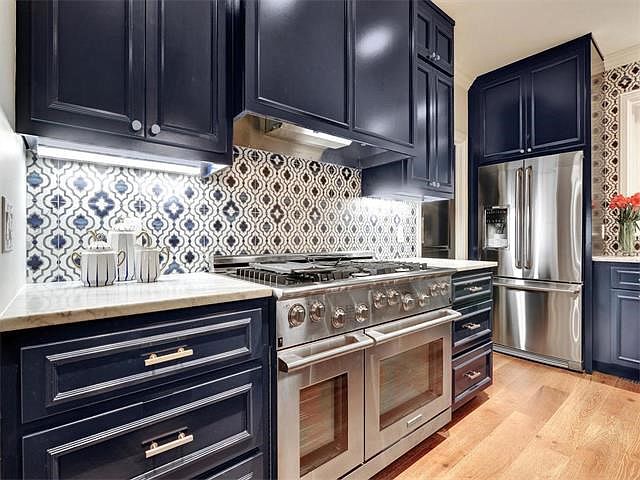
According to Zillow’s 2017 Paint Color Analysis, which examined more than 32,000 photos from sold homes around the country, homes with blue kitchens sold for a $1,809 premium, compared to similar homes with white kitchens.

Photo from Zillow listing.

Blue is also a popular bathroom shade. The same analysis found that homes with pale blue to soft periwinkle-blue bathrooms sold for $5,440 more.

Walls painted in cool neutrals, like blue or gray, can signal that the home is well cared for or has other desirable features.

3. Trendy features

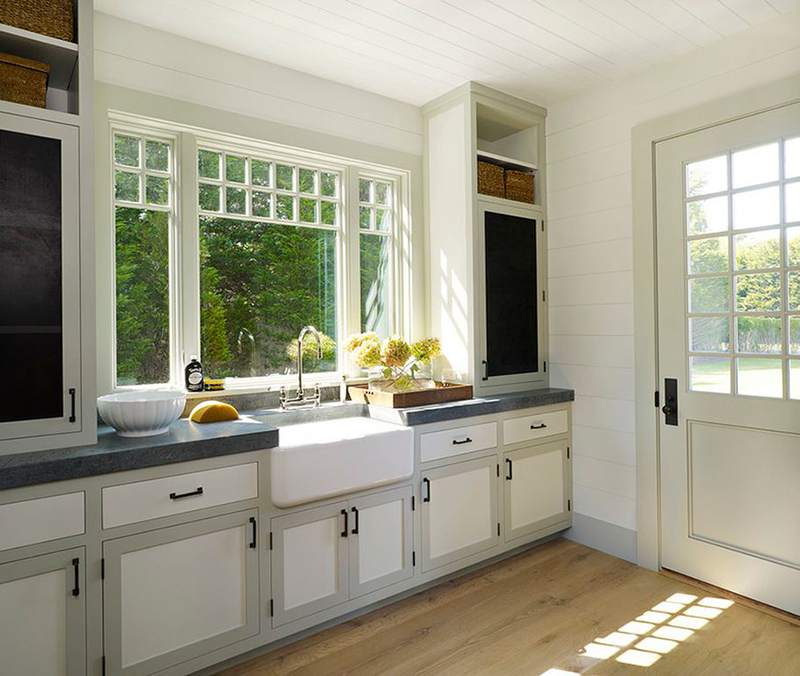
Joanna Gaines’ aesthetic is permeating more than just your YouTube search history. Zillow listings mentioning the shiplap queen’s favorite features — like barn doors and farmhouse sinks — sell faster and for a premium, according to a 2016 Zillow analysis of descriptions of more than 2 million homes sold nationwide.

Photo from Zillow listing.

Listings with “barn door” in the description sold for 13.4 percent more than expected — and 57 days faster than comparable homes without the keyword. Meanwhile, listings touting “farmhouse sink” led to a nearly 8 percent sales premium.

Sellers can use the listing descriptions to highlight trendy details and features that might not be noticeable in the photos.

4. How close you are to a city

If you own a home in a major American metropolitan area, you’re most likely sitting on a significant (and rapidly appreciating) financial asset. Case in point: Home values in the New York, NY, metro area are worth $2.6 trillion, per a recent Zillow analysis.

Photo from Shutterstock.

The average urban home is now worth 35 percent more than the average suburban home. Since 2012, the median home value in urban areas has increased by 54 percent, while the median home value in suburban areas is up just 38 percent.

Facebooktwitterpinterestlinkedin

3 Questions Clients Should Ask Before Buying a Vacation Rental | #VacationRentalInvestment #TalkToYourAgent #SiliconValleyAgent #YajneshRai #YourAgentMatters #01924991

Facebooktwitterpinterestlinkedin

3 Questions Clients Should Ask Before Buying a Vacation Rental | Realtor Magazine

If you have buyers interested in purchasing a vacation property as an investment and for extra cash flow, now is a great time, according to finance expert Rob Stephens, co-founder and general manager of Avalara MyLodgeTax, a tax solutions provider. Sites like Airbnb and HomeAway have contributed to the explosive growth in the number of travelers seeking to rent private homes for comfort, privacy, and sometimes lower costs.

“There’s no question that the vacation rental business is booming,” Stephens says. The short-term rental market in the United States alone is approaching $18 billion in revenue, with a projected annual growth rate of 6.6 percent, he says.

However, before your buyers decide to take on a short-term rental, Stephens advises that you pass on these three questions to help ensure their success:

1. Is a vacation rental a smart investment for you? Buying a vacation property can certainly be exciting, especially if it’s in a destination where the buyers love to spend time themselves. However, your clients need to be confident that they can cover all the costs involved. In addition to the transaction costs, make sure they understand what it will take to operate the rental. Do your clients plan to manage the property themselves or hire a professional (possibly you)? A vacation rental only generates income when it’s occupied, so your client needs to figure out how many renters they need each month and how much to charge to cover the cost of the property, and then decide whether it’s realistic or not.

Beyond the Mortgage: Explore Ownership Expenses With Investors

2. What are the laws governing short-term rentals in the community? Before you put in that offer on behalf of your investor clients, make sure the community or homeowners association allow short-term rentals. “Many communities prohibit owners from renting out their homes for fewer than 30 days,” Stephens says. Even some cities and states are starting to impose regulations on vacation rentals, he adds. Help your clients investigate short-term rental laws and regulations, including fines and other penalties if the property doesn’t comply. Call the HOA property management company, visit the city hall website, and have conversations with local agents who also handle vacation rentals.

3. Which taxes and fees are you required to collect from guests? “Many real estate investors overlook the fact that lodging or occupancy taxes need to be paid in order to rent the home in compliance with city and state tax agencies,” Stephens says. State and local lodging taxes vary widely, and can change with little notice, Stephens says. Your buyers need a lodging tax compliance tool or software if they’re planning to handle the rental themselves. “The right tool will offer a full range of solutions, including determining the vacation rental taxes and reporting requirements as well as calculating and filing returns on a monthly or quarterly basis,” Stephens says.

Facebooktwitterpinterestlinkedin