California OKs Solar Mandate for New Homes | #SolarMandateInCA #TalkToYourAgent #SiliconValleyAgent #YajneshRai #YourAgentMatters #01924991

Facebooktwitterpinterestlinkedin

California OKs Solar Mandate for New Homes | Realtor Magazine

California will become the first state to require all new homes to have solar power. The new requirement, which was approved by a five-member California Energy Commission on Wednesday, will take effect in two years. 

“You can bet every state will be watching to see what happens,” Bob Raymer, senior engineer for the California Building Industry Association, said in the public comments prior to Wednesday’s vote. 

New Jersey, Massachusetts, and Washington, D.C., have considered legislation that would ensure new buildings be solar-ready, according to the National Conference of State Legislatures. Hawaii lawmakers have considered mandating energy efficiency measures, such as solar water heaters. 

But California has been the first to approve such a move on a statewide scale. By 2020, builders will be required to make individual homes available with solar panels or build a shared solar-power system that could serve a group of homes. The rooftop panels can either be owned by the homeowner and rolled into the cost of the home, or leased on a monthly basis. 

The mandate could add up to $16,000 more to the cost of a home. But homeowners’ lower energy bills will make up for the extra costs of adding solar, state officials and clean-energy advocates say. Based on a 30-year mortgage, the Energy Commission estimates that the standards will add about $40 to an average monthly payment. The commission also estimates consumers could save $80 on monthly heating, cooling, and electricity bills. 

“Any additional amount in the mortgage is more than offset,” says Andrew McAllister, an Energy Commission member. “It’s good for the customer.”

California’s new mandate stems from a requirement that at least 50 percent of the state’s electricity needs to come from non-carbon producing sources by 2030. Solar power is becoming an increasingly important part in meeting that goal. 

Facebooktwitterpinterestlinkedin

Builder Makes Alexa a New-Home Standard | #AlexaInLennarHomes #TalkToYourAgent #SiliconValleyAgent #YajneshRai #YourAgentMatters #01924991

Facebooktwitterpinterestlinkedin

Builder Makes Alexa a New-Home Standard | Realtor Magazine

Lennar, the nation’s largest homebuilder, announced a deal with Amazon that will make voice-activated digital assistants a standard feature in its new homes, as well as other smart devices. The new homes will include built-in Wi-Fi, smart locks, doorbells, thermostats, and lights that can be controlled by Amazon’s voice-activated digital assistant, Alexa. 

“This will be the hallmark of why we buy a new home,” says David Kaiserman, president of Lennar Ventures. “It’s an important step in the mass adoption of all these technologies.” 

Every new home from Lennar will come with two Alexa-enabled smart speakers, an Echo Show and an Echo Dot. The builder will also give home buyers a complimentary visit from an Amazon technician to teach them how to operate everything. 

Lennar and Amazon announced Wednesday that they will be opening eight model homes across the country to showcase the technology.

“We want to be able to walk into one of these model homes and see how it all works in a real house, so they can see how much it would simplify their lives,” says Nish Lathia, general manager for Amazon Services. “It’s super addictive.” 

Voice assistants have been growing in popularity. About 18 percent of Americans this year use a smart speaker at least once a month, according to eMarketer, a digital marketing firm. Amazon holds the majority of the market share, but Google and Apple hope to change that. 

Facebooktwitterpinterestlinkedin

Mortgage Rates Barely Stirred This Week | #InterestRatesHeldSteady #TalkToYourAgent #SiliconValleyAgent #YajneshRai #YourAgentMatters #01924991

Facebooktwitterpinterestlinkedin

Mortgage Rates Barely Stirred This Week | Realtor Magazine

Mortgage rates have mostly taken a pause after a series of rises in April. The 30-year fixed-rate mortgage averaged 4.55 percent last week, unchanged from a week ago. 

“The minimal movement of mortgage rates in these last three weeks reflects the current economic nirvana of a tight labor market, solid economic growth, and restrained inflation,” says Sam Khater, Freddie Mac’s chief economist. “As we head into late spring, the demand for purchase credit remains rock solid, which should set us up for another robust summer home sales season.” 

Still, mortgage rates are up 50 basis points from a year ago, Khater notes. This has “put pressure on the budgets of some home shoppers” as “weak inventory levels are what’s keeping the housing market from a stronger sales pace.” 

Freddie Mac reports the following national averages with mortgage rates for the week ending May 10: 

  • 30-year fixed-rate mortgages: averaged 4.55 percent, with an average 0.5 point, unchanged from a week ago. A year ago, 30-year rates averaged 4.05 percent. 
  • 15-year fixed-rate mortgages: averaged 4.01 percent, with an average 0.4 point, falling from last week’s 4.03 percent average. A year ago, 15-year rates averaged 3.29 percent. 
  • 5-year hybrid adjustable-rate mortgages: averaged 3.77 percent, with an average 0.3 point, rising from last week’s 3.69 percent average. A year ago, 5-year ARMs averaged 3.14 percent. 
Facebooktwitterpinterestlinkedin

Calif. Takes Up Solar Mandate for New Homes | #SolarMandateForCA #TalkToYourAgent #SiliconValleyAgent #YajneshRai #YourAgentMatters #01924991

Facebooktwitterpinterestlinkedin

Calif. Takes Up Solar Mandate for New Homes | Realtor Magazine

California is on the brink of making solar standard on every new home built in the state. The California Energy Commission is set to vote on Wednesday on new energy standards that would require most new homes to have solar panels installed starting in 2020. 

If approved, solar installations will skyrocket in the state. Currently, just 15 to 20 percent of new single-family homes have solar facilities, Bob Raymer, technical director for the California Building Industry Association, told The Mercury News

“California is about to take a quantum leap in energy standards,” Raymer says. “No other state in the nation mandates solar, and we are about to take that leap.” 

A few cities have already made solar standard. For example, San Francisco and Fremont have mandated that solar panel systems be included in all new single-family and multifamily homes. Also in late 2016, Fremont mandated new residential and commercial developments to be “EV ready,” which requires most new single-family homes to have a large specialized outlet and a dedicated circuit in the garage so a resident could plug in an electric vehicle charger, Rachel DiFranco, the city’s sustainability manager, told The Mercury News. 

If approved on Wednesday, the new California solar mandate would encompass all homes, condos, and apartment buildings up to three stories that obtain permits after Jan. 1, 2020. Exceptions would be allowed for homes that are shaded by trees or buildings or whose roofs are too small to accommodate solar panels.

The solar mandate will increase building costs. Solar installations can cost about $14,000 to $16,000. With additional state mandates of increased insulation, more efficient windows, appliances, and more, the amount could jump another $10,000 to $15,000. However, the $25,000 to $30,000 extra for the building additions could potentially reduce an owner’s operating costs by $50,000 to $60,000 over the 25-year life of the home’s solar system, says C.R. Herro, Meritage Homes’ vice president of environmental affairs. 

Facebooktwitterpinterestlinkedin

Young Buyers Are Skipping the Starter Home | #StarterHome #TalkToYourAgent #SiliconValleyAgent #YajneshRai #YourAgentMatters #01924991

Facebooktwitterpinterestlinkedin

Young Buyers Are Skipping the Starter Home | Realtor Magazine

Millennials who delayed homeownership following the Great Recession are now finally entering the market in bigger numbers. They comprised 36 percent of home buyers last year, up from 32 percent in 2013, according to the National Association of REALTORS®. But they’re trying to make up for lost time by skipping over the starter, entry-level home and heading right into buying larger, pricier homes that they plan to stay in longer, USA Today reports.

Inventory shortages are particularly critical in entry-level price points. Use these strategies to help expand housing options for your clients. Read more.

“They rented for longer,” says Diane Swonk, chief economist at Grant Thornton. “Now they’re going to where they want to stay.” 

Many millennials in their mid-30s can now afford the more expensive homes. Some young adults have been saving by living with their parents for years into adulthood. They’ve also been moving up in their jobs and earning higher salaries. 

As they get married and start raising kids, they’re finding they need more space and are moving into homeownership. However, a severe shortage of lower-priced starter homes is prompting them to up their budgets and look at pricier places. 

The cost for what is generally considered a starter home can vary widely by geographic area, but tends to average between $150,000 to $250,000 in most markets, Swonk says. 

The percentage of millennials who purchased homes for $300,000 or more this year stands at 30 percent, up from 14 percent in 2013, according to data from NAR. 

Older millennials tend to splurge the most. From 2012 to 2016, nearly one-third of buyers ages 33 to 37 purchased four-bedroom homes compared to about 24 percent in 1980, 1990, and 2000, according to an analysis by Ralph McLaughlin, chief economist at Veritas Urbis Economics.

Facebooktwitterpinterestlinkedin

Pre-Listing Inspections Put Sellers in Control | #DependingOnMarketConditions #TalkToYourAgent #SiliconValleyAgent #YajneshRai #YourAgentMatters #01924991

Facebooktwitterpinterestlinkedin

Pre-Listing Inspections Put Sellers in Control | Realtor Magazine

In the typical real estate transaction, the buyer is the one to order a home inspection. But sellers, too, can request a professional assessment of their home before putting it on the market. A pre-listing inspection provides sellers with upfront information about the condition of their property, which gives them more control over repairs and potentially strengthens their negotiating position.

Few sellers take advantage of this opportunity, according to Steve Wadlington, president of national home inspection services company WIN Home Inspection. “I don’t expect pre-listing inspections to become mainstream in my lifetime,” he says. Lack of awareness contributes to the underutilization, Wadlington adds, but he also acknowledges that sellers may be reluctant to spend the money for such services.

Additionally, sellers and their agents have a legal duty to disclose to buyers any property issues that are revealed in a pre-inspection report. REALTOR® Magazine spoke with Wadlington about how pre-listing inspections can boost home sales and help sellers defend their asking price.

Are there any differences between a pre-listing inspection and a buyer’s inspection?

The only differences are the customer for whom the inspection is being conducted—in this case it’s the seller, not the buyer—and the point when the inspection occurs. The scope of the inspection is the same. A pre-listing inspection focuses on proper functionality of all major systems and components of the house: heating and cooling; electrical; plumbing; roof and structure; siding; and doors and windows. It’s a full inspection for the seller to better understand the condition of their home prior to the buyer’s inspection. This gives the seller important information to consider so they’re not caught off-guard in the midst of a transaction.

How much does a typical pre-listing inspection cost?

The fee is usually the same as a buyer’s inspection, generally ranging from $350 to $500 for a qualified inspector who carries E&O insurance. Of course, the price varies based on location, square footage, age of the home, and any special conditions, such as whether the home is built on a steep incline.

Why should a seller do an inspection, particularly if the buyer is going to do one anyway?

The value to the seller is that a pre-listing inspection makes them aware of issues in advance of negotiating a purchase agreement, allowing them the chance to resolve the issues or have them accounted for upfront in the asking price. This gives the seller better control in marketing their home and helps minimize stress from heat-of-the-moment negotiations once a purchase agreement is tendered. Homes that have a pre-listing inspection generally sell faster and have fewer inspection-related issues to negotiate, enabling a smoother transaction.

What should a seller do if a pre-listing inspection uncovers significant problems in the home?

It’s always better for everyone to know about major inspection issues as soon as possible. Once they’re identified, they can be carefully assessed for proper resolution. Depending on the nature of the issue, a seller shouldn’t automatically assume that everything needs to be fixed before putting the home on the market. Their real estate professional should advise whether the repairs are necessary to the viability of the sale. Regardless of who owns the property, issues of concern to the buyer will need to be dealt with somehow, and the associated cost of the resolution is a consideration for both the buyer and seller.

If the seller doesn’t want to pay for repairs, what solace does a pre-listing inspection give to the buyer?

For many buyers, being provided forthcoming inspection information has both tangible and emotional value. They’re made aware of issues identified in the inspection report, which gives them more facts to work with, and then they’re provided subsequent clarity on which issues have been or will be resolved as part of the transaction. Sellers who proactively disclose pre-listing issues give buyers proper awareness to factor them into their offers.

Can pre-listing inspections help real estate professionals when marketing a home?

The more information agents can provide to give buyers peace of mind, the better it is for the sale. A pre-listing inspection can also reinforce the seller’s asking price. It enables agents to explain how the inspection report—plus any repairs that were made before listing—helped the sellers arrive at the home’s value. At WIN, we also provide a “Ready for Purchase” sign rider to identify the house as one that has pre-listing inspection information available. It’s similar to what the auto industry has done with marketing certified used cars.

What about sellers who don’t see the sense in paying for an inspection?

Actually, a pre-listing inspection can ultimately save money for sellers in two ways. First, by being aware of and disclosing known property issues upfront, the seller can make it known that consideration for those items has already been factored into the sales price. That effectively takes these issues off the negotiation table. Second, the seller can choose to repair the issues prior to listing, which gives them more control over repair costs.

Should a seller offer the entire pre-listing inspection report to a buyer or just a summary? How much detail is necessary?

I think this is a situational consideration, where sellers should consult with their real estate professional. The industry has evolved such that it is reasonable to view the inspection summary as containing all of the important need-to-know items found in the full report. Since the real goal here is to ensure transparency and awareness, the summary should be adequate to achieve that. Depending on the length and complexity of the full report, as well as the technical complexity of the issues presented in the summary, I can see where a good faith effort to offer more detail could actually cause undue alarm if the buyer can’t put the information in proper perspective. But bear in mind that much of the longer report will also confirm positive functionality of the major systems and components of the home, so it can offer added positive value as well.

Wouldn’t buyers still want to do their own inspection?

Yes, absolutely. If a seller claims to have resolved issues that were uncovered in a pre-listing inspection, the buyer will want a subsequent inspection to confirm those repairs. Whether the buyer uses the same inspector that the seller used is a matter of personal preference, and there are pros and cons either way. Using the same inspector can be beneficial because their prior experience and familiarity with the home allows them to better detect changes based on a point in time. But a properly trained and certified home inspector will inspect the home for the seller or the buyer in the same manner. This person’s view of the home is objective and won’t change based on who hired them.

Facebooktwitterpinterestlinkedin

Smart and Sustainable Home Technology to Reduce Utility Bills | #SmartHome #TalkToYourAgent #SiliconValleyAgent #YajneshRai #YourAgentMatters #01924991

Facebooktwitterpinterestlinkedin

Smart and Sustainable Home Technology to Reduce Utility Bills

The financial and environmental costs of using utilities add up fast. In many cases – and we’re all guilty of this – we don’t realize how much we’re consuming until the utility bill shows up. We scratch our heads and think, “wow, there’s no way I used 897 kilowatt-hours of electricity this month.” (The average U.S. household uses that much each month and 10,766 kWh per year.)

Fortunately, there are several in-home tech products that will save you money on your utility bills and help the environment at the same time.

How Much Electricity Do You Use Around the House?

Green technology that saves money on utilities

Each month, your utility bill is calculated based on how many kilowatt-hours are consumed.

So just how far does one kilowatt-hour go?

A kilowatt-hour, which is a measure of electrical energy equivalent to a power consumption of 1,000 watts for one hour, could power ten incandescent 100-watt lightbulbs for an hour. One kwh costs about $0.12 (so leaving the lights on, despite what your mother said about turning them off to save money, isn’t as expensive as it seems). Check out this table, which lists common household appliances and how much energy they use in an average month:

Appliance average kWh per hour used each month and average cost

 Appliance  Appliance Average kWh per hour used each month Average cost each month
Smartphone .08 kWh $0.01
Tablet .9 kWh $0.11
One LED Lightbulb 1.2 kWh $0.14
Big-screen TV 2.5 kWh $0.30
Wireless modem and router 7.5 kWh $0.90
Gaming System 8.3 kWh $1.00
One 60-watt Incandescent Lightbulb 18.3 kWh $2.20
Desktop Computer 25.0 kWh $3.00
Refrigerator 29.1 kWh $3.50
Washer and Dryer 69.44 kWh $8.33
Water Heater 416.7 kWh $50.00
Heating and cooling 640.5 kWh $76.86

So does that mean you have to put on a sweater or take a cold shower? Not necessarily. If you know what you’re doing, you can save hundreds of kWh each month by utilizing the latest in-home technology.

Heating and Cooling

  • Smart Thermostat: To save cash on heating and cooling, no matter what climate you live in, consider investing in a smart thermostat, such as a Nest. Most are compatible with Google Home, Echo and other in-house automated assistants, and they work by keeping temperature settings consistent. Some have sensors to keep tabs on hot and cold spots in your house, and you can program them to manage the temperatures when you’re at work, on vacation or asleep, so you’re not wasting energy on climate control you don’t need.
  • Motorized Shades: Many motorized shades today allow you to set specific times when they should open or close. This is usually done from an app on your phone regardless of if you are home or not. You will end up saving money by keeping the sun out when it’s hot in the day or choosing to let the light warm up your space. You can also opt for honeycomb shades, which are designed especially for insulation, but any shade or drape with the right spacing will help slash your heating costs.

Average Savings: Between $131 and $145 per year

Green technology that saves money on utilities 2 (2)

Light Use

  • Smart Lights: Smart lights, like Philips Hue and LIFX, can save you cash through programming, motion detection and remote access to your lights when you’re away from home (so you’ll never have to leave the lights on for two weeks straight while you’re visiting your mother-in-law in Poughkeepsie), but that’s not all there is to it. Smart lights are LEDs, which cost less to operate; running an LED costs only a few pennies, while old incandescent lights cost about 11 times more.

Average Savings: Between $80 and $120 per year

Games, TVs and Other Appliances

  • Surge Protectors: Video game consoles and some other appliances use energy even when nobody’s using them, so a conservation-themed surge protector, like the Belkin Conserve Switch Surge Protector, lets you switch things off with a remote. Other types, like ThinkEco, cut down consumption when your plugged-in devices are in standby mode.

Average Savings: Between $60 and $80 per year

Laundry

  • Energy-efficient washers: Although energy-efficient washers are pretty much all you’ll find when you shop, know that certified ENERGY STAR products can help you save cash and water, so you get even more bang for your buck if you pay a water bill. If you wash your clothes in warm (not hot) or cold water, you’ll save even more. Typically, an ENERGY STAR washing machine uses 25 percent less electricity than its non-eco-friendly counterparts do.

Average Savings: Between $75 and $125 per year

Green technology that saves money on utilities 2

How Much Water Does Your Household Use?

While estimates vary based on location, the average U.S. household uses about 90 gallons of water every day. Most of that water goes right down the toilet – literally. Toilet flushing and showers are the two biggest culprits when it comes to wasting water, and dishwashers, washing machines and outdoor watering are right behind them. Check out this chart to figure out how much water the average American household uses each year and how much it costs (tap water costs about $0.004 per gallon).

 Appliance Average Gallons Used Each Time Average Cost Per Use
Bath 36 gallons $0.14
Shower (10 Minutes) with ordinary shower head 50 gallons $0.20
Shower (10 Minutes) with water-saving showerhead 20 gallons $0.08
Dishwasher (non-ENERGY STAR) 16 gallons $0.06
Dishwasher (ENERGY STAR) 6 gallons $0.02
Toilet Flush (Regular) 3 gallons $0.01
Toilet Flush (low-flow) 1.6 gallons Less than $.01
Outdoor watering (30 minutes) 60 gallons $0.24

Other than cutting down on water consumption by investing in ENERGY STAR appliances, doing fewer loads of laundry and taking shorter showers, there are a few devices you can add to your home to drastically reduce your water consumption.

Showers and Faucets

  • High-efficiency faucet aerator: Installing a high-efficiency faucet aerator in your shower and on your taps can cut your water consumption in half. Because they add air, you won’t suffer a loss in pressure.
  • Smart home water meter: You can also opt for a smart home water meter, which shows you how you’re using water around the house, as well as how much you’re using. You’ll be able to keep tabs on how much goes to laundry, lawn irrigation and other applications in your home, and you can create a “signature” for each appliance to get a better understanding of where you can cut back and prevent your budget from drying up.

Average Savings: About $100 per year

Green technology that saves money on utilities 3

Toilets

  • Smart toilets: First, they can help you save water, and second, they can eliminate toilet paper waste – so that means you’re helping the environment in two ways. The EPA states that toilets labeled with WaterSense labels can reduce water usage by 20-60% and save around 13,000 gallons of water per year. 

Average Savings: About $100 per year

Smart Home Security

  • Smart Home Security System: Having a smart home security system in place can save you money on homeowners insurance. Think of it like having airbags in the car – your insurer knows that you’re taking measures to mitigate risk, which means your rates are likely to go down. The latest-and-greatest security systems monitor your home’s electricity and wiring, and record activity that goes on inside and outside your house. Sometimes you can even get a claims-free credit, which offers you a discount if you haven’t made a claim in the past.

Average Savings: Up to 20% of your normal bill

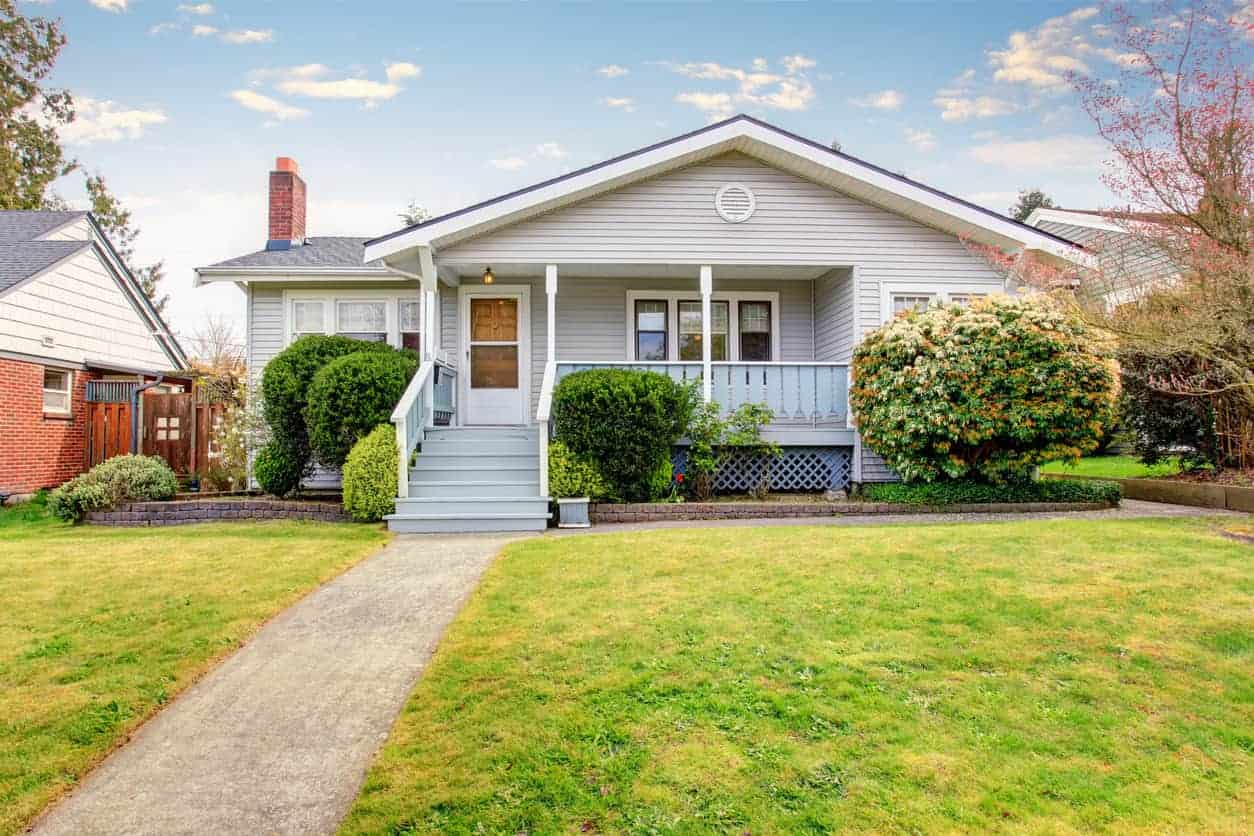
Beige siding house exterior with covered porch and trimmed bushes in front. View of soft blue staircase with narrow walkway.


What Smart Tech Do You Depend On?

Utility bills can get expensive, so savvy homeowners are using all kinds of smart tech to save cash, while also helping the environment. We’d love to hear about the technology you can’t live without, so share your story in the comments!

Facebooktwitterpinterestlinkedin

Where Property Taxes Are Most Burdensome | #CANotOnList! #TalkToYourAgent #SiliconValleyAgent #YajneshRai #YourAgentMatters #01924991

Facebooktwitterpinterestlinkedin

Where Property Taxes Are Most Burdensome | Realtor Magazine

New Jersey homeowners pay the most in property taxes in the nation, and homeowners there also find taxes make up some of the highest percentages of their total housing costs in the nation. A new study by SmartAsset, a personal finance resource, found that seven cities—five of which are in New Jersey—had property taxes that were more than 30 percent of the cost of owning a home. The average effective property tax in New Jersey is 2.19 percent, which is nearly double the national effective property tax rate of 1.19 percent. 

On the other end, Alabama and Louisiana homeowners pay some of the least in real estate taxes. Nine of the bottom 15 cities in SmartAsset’s study are in Alabama or Louisiana. On average, property taxes make up less than 7 percent of housing costs for homeowners in these states. 

SmartAsset ranked cities where property taxes have the biggest impact on housing costs by looking at the data on 599 cities across two factors: median property taxes paid and median housing costs. The following chart ranks where property taxes have the largest impact on housing costs.


Facebooktwitterpinterestlinkedin

After April Hikes, Mortgage Rates Slide in May | #InterestRatesRelaxesABit #TalkToYourAgent #SiliconValleyAgent #YajneshRai #YourAgentMatters #01924991

Facebooktwitterpinterestlinkedin

After April Hikes, Mortgage Rates Slide in May | Realtor Magazine


After mortgage rates rose for most of April, they dropped slightly in the kickoff to May. The 30-year fixed-rate mortgage dropped three basis points to average 4.55 percent. 

“While mortgage rates have increased by one-half of a percentage point so far this year, it has not impacted home purchase demand, which continues to grow this spring,” says Sam Khater, Freddie Mac’s chief economist. “The observed buyer resiliency in the face of higher rates reflects the healthy economy and strong consumer confidence, which are important drivers of home sales activity. It’s also good news that first-time buyers appear to be having more success so far this year, despite higher borrowing costs and home prices. Our data through April shows that first-timers represent 46 percent of purchase loans, up from 43 percent over the same period a year ago.” 

Freddie Mac reports the following national averages with mortgage rates for the week ending May 3:

  • 30-year fixed-rate mortgages: averaged 4.55 percent, with an average 0.5 point, dropping from last week’s 4.58 percent average. Last year at this time, 30-year rates averaged 4.02 percent. 
  • 15-year fixed-rate mortgages: averaged 4.03 percent, with an average 0.4 point, rising from last week’s 4.02 percent average. A year ago, 15-year rates averaged 3.27 percent. 
  • 5-year hybrid adjustable-rate mortgages: averaged 3.69 percent, with an average 0.3 point, dropping from last week’s 3.74 percent average. A year ago, 5-year ARMs averaged 3.13 percent. 
Facebooktwitterpinterestlinkedin

Fed Decides to Leave Rates Alone—For Now | #FedToNotRaiseInterestForNow #TalkToYourAgent #SiliconValleyAgent #YajneshRai #YourAgentMatters #01924991

Facebooktwitterpinterestlinkedin

Fed Decides to Leave Rates Alone—For Now | Realtor Magazine

The Federal Reserve decided Wednesday that it would not raise rates and keep its benchmark interest rate unchanged, despite rising inflation. Mortgage rates are not directly tied to the Fed’s benchmark rate, but they do tend to be influenced by them. 

The Federal Open Markets Committee had raised rates for the first time in 2018 at its last meeting in March. At that time, it had increased the federal funds rate by 25 basis points. 

At May’s meeting, the FOMC voted to keep rates the same and maintain the target range at 1.5 percent to 1.75 percent. 

“Information received since the Federal Open Market Committee met in March indicates that the labor market has continued to strengthen and that economic activity has been rising at a moderate rate,” the committee noted in a statement. “Job gains have been strong, on average, in recent months, and the unemployment rate has stayed low.” Inflation has risen to nearly 2 percent. 

The FOMC also said that it expects to continue gradually raising interest rates later on, but that they will likely remain at historically low levels for some time.

“The committee expects that economic conditions will evolve in a manner that will warrant further gradual increases in the federal funds rate; the federal funds rate is likely to remain, for some time, below levels that are expected to prevail in the longer run,” the committee stated. “However, the actual path of the federal funds rate will depend on the economic outlook as informed by incoming data”

Facebooktwitterpinterestlinkedin